Adipose tissue is usually discussed as a single substance distributed unevenly around the body. It is more accurate to describe it as several tissues that happen to store the same molecule, differing in cellular composition, receptor expression, secretory profile, and, most consequentially, in where their venous blood goes.
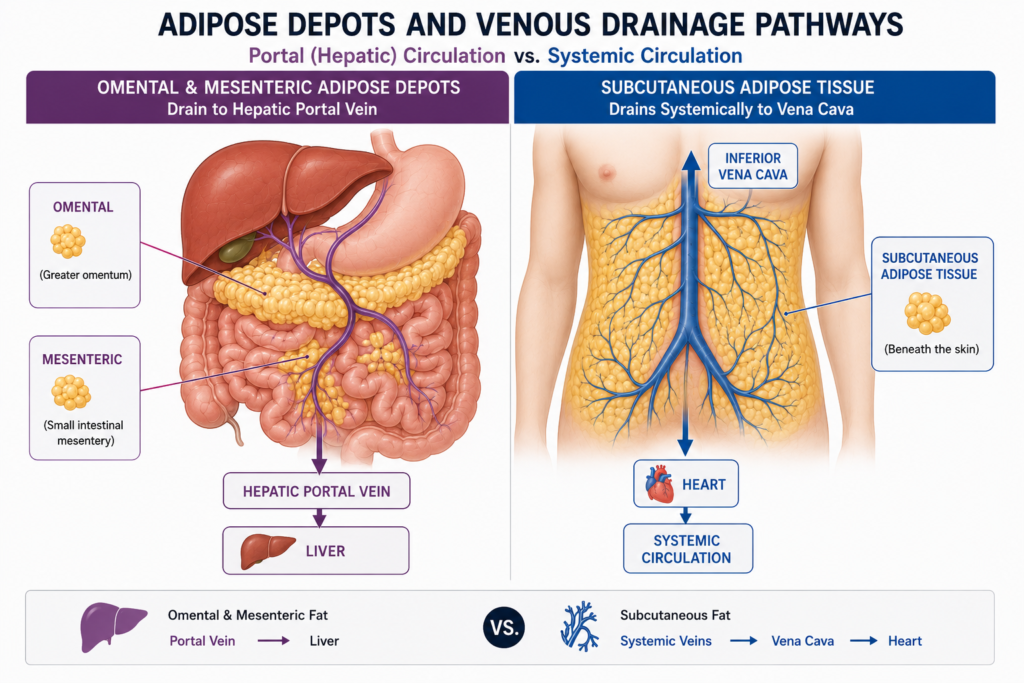
That last difference is anatomical rather than metabolic, and it is the origin of most of what distinguishes visceral from subcutaneous adipose tissue in the research literature. Subcutaneous depots drain systemically into the vena cava, delivering their secreted products to the general circulation, where they are diluted across the whole blood volume before reaching any organ. Omental and mesenteric depots drain into the hepatic portal vein, which means their secreted products arrive at the liver first and at concentrations the systemic circulation never sees.
This article sets out what is established about depot-specific biology, what remains contested about the portal mechanism, the measurement problems that make much of the published depot literature harder to interpret than it appears, and what the compound literature actually shows about depot-selective effects, including the substantial gap between what has been demonstrated in one clinical population and what is routinely inferred from it.
Why the Depot Distinction Exists: Anatomy Before Metabolism
The two depots differ before any metabolic difference is considered.
Omental and mesenteric adipose tissue sit within the abdominal cavity and drain through the portal system. Subcutaneous adipose tissue sits outside the peritoneum and drains systemically. Everything downstream of that difference concerns which tissue is exposed to what, and at what concentration.
Cellular composition differs as well. A review of visceral adipose pathophysiology in cardiometabolic disease describes the visceral depot as undergoing more extensive remodelling during adipose expansion, characterised by adipocyte hypertrophy and death, local hypoxia, inflammation, and fibrosis. The same review notes a depot difference in glucose handling that runs opposite to the usual assumption: when expressed per unit of fat mass, glucose uptake is greater in omental than in abdominal subcutaneous tissue, an effect attributable to smaller adipocyte size and therefore more adipocytes per unit mass.
Receptor-level differences are the mechanism behind depot-specific lipolytic behaviour. Bolinder and colleagues (Diabetes, 1983) documented differences at both receptor and post-receptor levels between human omental and subcutaneous tissue in the action of insulin on lipolysis, which is the foundational observation that the two depots respond differently to the same hormonal signal. Adrenergic receptor density and subtype distribution differ between depots, which is why catecholamine-stimulated lipolysis proceeds at different rates in each.
Macrophage infiltration is the third axis. Visceral adipose tissue shows a higher degree of inflammatory infiltration than other depots in multiple reports, and visceral but not subcutaneous macrophage infiltration has been described as distinguishing insulin-sensitive from insulin-resistant individuals at comparable adiposity.
The Portal Theory: Mechanism, Evidence, and Where It Is Contested
The portal hypothesis proposes that the liver is directly exposed to free fatty acids and inflammatory cytokines released from visceral adipose tissue into the portal vein, and that this exposure is what makes visceral accumulation specifically hazardous for hepatic insulin resistance rather than merely correlated with it.
The most direct experimental test of the drainage claim came from a fat transplantation paradigm. Rytka and colleagues in Diabetes (2011) transplanted fat pads from donor mice to the mesenterium of recipient littermates, producing grafts drained solely to the portal vein, and compared them against transplants drained systemically. The design isolates drainage route from tissue type, since both groups received the same tissue. The portally drained group showed impaired glucose tolerance and hepatic insulin resistance while the systemically drained group did not, which the authors describe as demonstrating that the metabolic fate of intra-abdominal fat transplantation is determined by delivery of inflammatory cytokines to the liver specifically via the portal system.
The proposed downstream chain is coherent. Elevated portal free fatty acid and glycerol delivery drives hepatic lipid accumulation and increases hepatic output of very low density lipoprotein and glucose, while portally delivered inflammatory cytokines contribute to hepatic insulin resistance, inflammation, and fibrosis.
Caveat on the portal mechanism: The portal theory is a leading hypothesis under active challenge, not a settled account, and a critical review in Obesity Reviews (2012) exists precisely to examine how much of the human association it can carry. Two objections recur. Liver fat content rather than total visceral fat mass tracks most closely with reduced insulin sensitivity, which would place the liver upstream rather than downstream. And quantitatively, most free fatty acids reaching the liver through the portal vein appear to originate from abdominal subcutaneous tissue rather than from the visceral depot, since the subcutaneous compartment is far larger in absolute mass. A study designed on the assumption that visceral depot mass is the dominant source of portal free fatty acid delivery has adopted a contested premise as a fixed one.
What Drives Depot Distribution
Where adipose tissue accumulates is governed by a different set of variables from how much accumulates, and the two questions are often collapsed.
Energy surplus determines total adipose mass. It does not determine distribution, which is why individuals at comparable total adiposity differ substantially in visceral fraction.
Glucocorticoid signalling is the most-cited distribution variable. Visceral adipose tissue expresses glucocorticoid receptors at higher density than subcutaneous tissue and shows greater local cortisol regeneration through 11-beta-hydroxysteroid dehydrogenase type 1, which is the mechanistic basis for the depot-specific pattern seen in states of chronic glucocorticoid excess.
Sex hormone status shapes the baseline distribution difference between men and women, and the shift in visceral fraction observed across the menopausal transition is one of the clearest natural experiments in the depot literature. Aging produces a redistribution toward visceral accumulation that is partly independent of change in total mass.
Sleep restriction and circadian disruption appear in the literature as distribution variables rather than purely as energy balance variables, though the mechanistic account remains less developed than the glucocorticoid one. Genetic contribution to depot distribution is substantial and largely separate from genetic contribution to total adiposity.

What Lifestyle Intervention Research Has Measured
The intervention literature here is large, and the useful summary is about which endpoints have been measured and how well, rather than about protocols. Each entry below pairs what the research has looked at with the design limitation that constrains what it can conclude, because in this literature the limitation is usually the more informative half.
- Aerobic exercise. The best-developed intervention literature in the depot field, and the observation that made the depot interesting in the first place: aerobic interventions frequently produce visceral reductions disproportionate to change in total body mass, with some trials reporting visceral change and little or no weight change.
- Limitation: trials vary widely in duration, intensity prescription, and measurement method, and pooling across those differences is where most meta-analytic disagreement in this area originates.
- Resistance training. A different endpoint profile from aerobic work. Effects on lean mass alter the denominator against which any adipose change is expressed, so the same absolute change reads differently depending on which compartments were reported.
- Limitation: studies reporting only adipose change without lean mass are not comparable to those reporting both, and the direction of the discrepancy is not predictable.
- Interval versus continuous exercise protocols. A substantial comparative literature exists, generally reporting broadly similar depot effects at matched total energy expenditure.
- Limitation: matching total work between protocols is difficult, and unmatched comparisons are measuring energy expenditure rather than protocol structure.
- Sedentary time independent of structured exercise. Studied as a variable in its own right, on the rationale that prolonged sitting affects lipoprotein lipase activity and postprandial lipid handling through mechanisms partly separate from planned activity.
- Limitation: almost entirely observational, with objective accelerometry available in only a minority of cohorts, and confounding with total activity is difficult to eliminate.
- Dietary composition. Harder to interpret than energy-restriction work, because most composition interventions produce some energy restriction as a side effect. Separating the two requires isocaloric designs that are expensive and difficult to sustain.
- Limitation: free-living compliance is typically self-reported, and self-reported intake is a known weak instrument.
- Added sugar and fructose specifically. This receives separate attention from general composition work because it carries a distinct mechanistic hypothesis rather than an energy one: fructose is metabolised predominantly in the liver and is a substrate for hepatic de novo lipogenesis, which places it upstream of hepatic lipid accumulation independently of adipose depot mass.
- Limitation: the mechanism is well characterised at the biochemical level and much less well demonstrated at the population level at ordinary intakes, and most human studies use exposures well above habitual intake.
- Dietary fibre. Studied through several proposed routes, including effects on postprandial glycaemic response, satiety signalling, and short-chain fatty acid production by the colonic microbiota.
- Limitation: fibre intake correlates strongly with the rest of a dietary pattern, so isolating it in observational data is close to impossible and interventional work is limited.
- Alcohol intake. Of particular relevance to the portal mechanism, since ethanol is metabolised hepatically and both alcohol and portally delivered free fatty acids converge on the same organ.
- Limitation: intake is self-reported and systematically under-reported, and the exposure is confounded with dietary pattern, energy intake, and sleep quality simultaneously.
- Sleep duration and circadian alignment. A newer and smaller literature than the exercise work, with correspondingly weaker conclusions, though the mechanistic rationale through cortisol rhythm and glucose handling is coherent.
- Limitation: sleep extension interventions are difficult to blind and difficult to sustain, and adherence measurement is inconsistent across studies.
- Meal timing and time-restricted eating. An active area with rapidly accumulating trials examining whether the distribution of intake across the day affects depot distribution independently of total intake.
- Limitation: most trials to date have not achieved isocaloric conditions, so what is being measured is frequently energy restriction with a timing label.
- Psychological stress and cortisol exposure. Follows directly from the glucocorticoid receptor density difference between depots described above, and this is the intervention category with the clearest mechanistic rationale and the weakest outcome evidence.
- Limitation: stress-reduction interventions are heterogeneous, hard to blind, and hard to quantify, and cortisol measurement itself varies by matrix and sampling schedule.
- Smoking status. Included because it runs counter to the usual pattern and is therefore informative about the difference between total adiposity and depot distribution. Smoking is associated with lower total adiposity and with a higher visceral fraction, which is one of the clearest demonstrations that the two are separate variables.
- Limitation: observational throughout, with substantial confounding by socioeconomic and dietary factors.
The methodological point running through all of this is that “reduced visceral fat” means different things depending on how it was measured, which is the subject of the next section and the reason a great deal of this literature is less comparable than it appears. A study that measured the compartment properly and found nothing is more informative than a study that measured a proxy and found an effect.
Prerequisite Condition: Most Depot Studies Cannot Measure What They Claim
Two measurement problems constrain how any of the preceding literature can be read, and both are routinely unstated in secondary coverage.
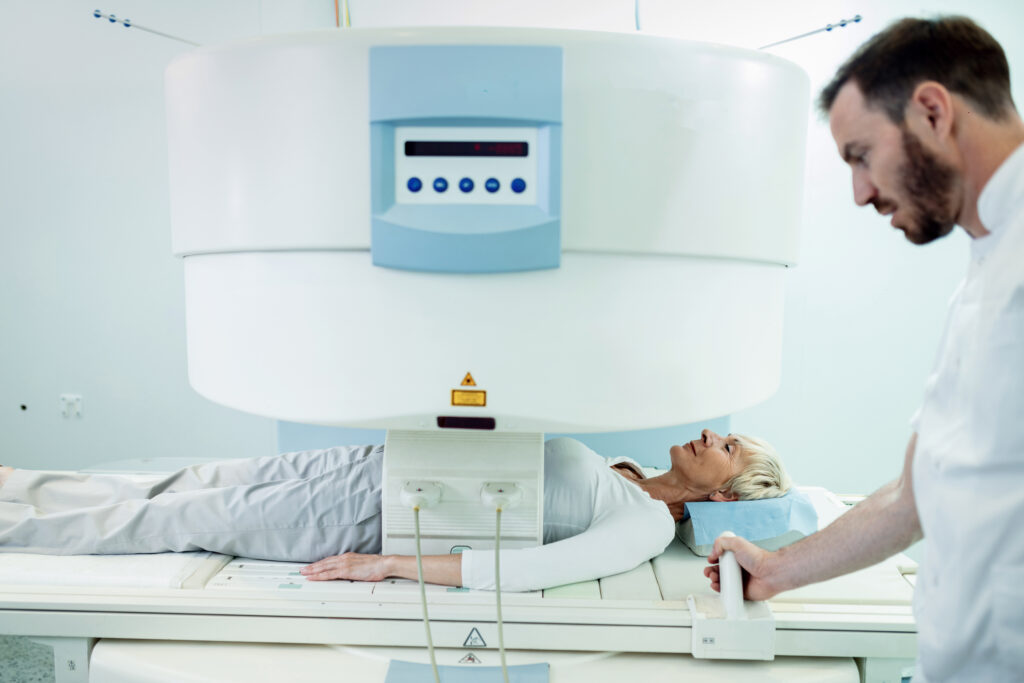
Imaging resolution. Computed tomography and magnetic resonance imaging resolve visceral and subcutaneous compartments as distinct anatomical regions and can quantify each separately. The tesamorelin phase 3 programme, for instance, assessed visceral adipose tissue by CT from a single 5-mm slice at the L4-L5 intervertebral disc, analysed blind at a central imaging centre. Dual-energy X-ray absorptiometry does not separate the compartments with comparable reliability, and its android or trunk region estimates include both. Waist circumference is a proxy for total abdominal content, which includes both depots plus everything else in the abdomen. A study reporting an effect on visceral adipose tissue from a DEXA readout or a tape measure has not measured the compartment it names, and its results are not comparable to a CT or MRI study that has.
Species anatomy. Rodent models do not have an adipose compartment that maps cleanly onto human omental tissue, and the depots most often labelled visceral in rodent work are epididymal or perigonadal, which are not portal-drained. Caesar and colleagues (PLoS ONE, 2010) reported marked functional differences across subcutaneous, epididymal, and mesenteric depots in a combined transcriptomic and lipidomic analysis, and Wueest and colleagues (American Journal of Physiology, 2012) documented inverse regulation of basal lipolysis between perigonadal and mesenteric depots in mice. The mesenteric depot is the portal-drained one. A rodent study using epididymal fat as a model of human visceral adipose tissue has selected a depot with different drainage, different transcriptional profile, and inverted lipolytic regulation relative to the compartment it is standing in for.
| Method | Separates depots? | What it actually measures | Comparable to CT studies? |
| CT, single slice at L4-L5 | Yes | Cross-sectional visceral and subcutaneous area | Yes, if slice location matches |
| MRI, multi-slice volumetric | Yes | Compartment volume | Yes, with conversion caveats |
| DEXA android or trunk region | Poorly | Combined abdominal adipose mass | No |
| Bioelectrical impedance | No | Whole-body composition estimate | No |
| Waist circumference | No | Total abdominal girth, all contents | No |
| Rodent epididymal or perigonadal depot | Not applicable | A non-portal-drained depot | No |
Compound Mechanisms: The GH Axis and Depot-Selective Lipolysis
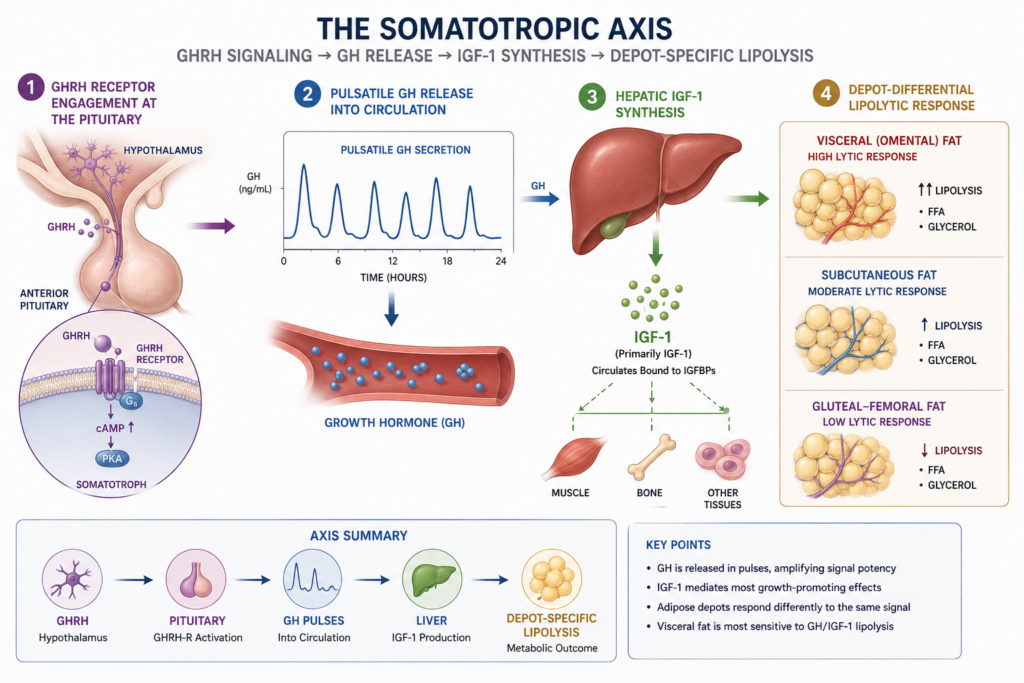
Growth hormone axis compounds appear in the depot literature because visceral adipose tissue is unusually responsive to growth hormone signalling relative to subcutaneous tissue, an asymmetry attributable to depot differences in growth hormone receptor density and in the adrenergic and lipolytic machinery that GH signalling engages.
The mechanism chain runs through the somatotropic axis rather than through the adipocyte directly. Growth hormone releasing hormone receptor engagement on anterior pituitary somatotrophs activates Gs-coupled signalling, raising intracellular cyclic AMP and driving pulsatile growth hormone release. Circulating growth hormone acts at hepatic and peripheral growth hormone receptors, producing IGF-1 synthesis in the liver and, in adipose tissue, an increase in hormone-sensitive lipase activity and a reduction in lipoprotein lipase activity, shifting net flux toward lipolysis. Because the depots differ in receptor density and in adrenergic subtype distribution, the same systemic signal produces unequal responses in each.
The distinction between GHRH analogs and direct growth hormone administration matters here for a reason that is mechanistic rather than regulatory. Recombinant human growth hormone administration bypasses pituitary control entirely, producing sustained rather than pulsatile exposure and no functioning negative feedback. GHRH analogs act upstream, so somatostatin tone and pituitary feedback architecture remain intact, and the resulting release pattern retains its pulsatility. Reviews of the lipodystrophy literature note that recombinant growth hormone produced visceral reductions in the range of 8.5 to 11 percent in clinical trials, but at exposures that induced insulin resistance, arthralgia, carpal tunnel syndrome, and peripheral oedema, and that this tolerability profile is what motivated development of the upstream approach. Investigators comparing GHRH analogs and growth hormone secretagogue research compounds are therefore comparing two mechanisms that differ in feedback architecture, not merely in potency.
What the Evidence Actually Supports, Graded by Population
This section exists because the gap between what has been demonstrated and what is commonly inferred is wider here than anywhere else in the depot literature.
Tesamorelin, in HIV-associated lipodystrophy, has the strongest depot-selective human evidence of any compound discussed here, and that evidence is specific to that population. Tesamorelin is a 44-amino-acid GHRH analog carrying an N-terminal trans-3-hexenoic acid modification that confers resistance to enzymatic degradation. It is approved by the United States Food and Drug Administration, and by Health Canada, as a prescription pharmaceutical product for the reduction of excess abdominal visceral adipose tissue in adults with HIV-associated lipodystrophy. That is its only approved indication anywhere.
The evidence base for that indication is genuinely strong. Falutz and colleagues (Journal of Clinical Endocrinology and Metabolism, 2010) pooled two multicentre double-blind placebo-controlled phase 3 trials and reported that in adults with HIV and excess abdominal fat, treatment reduced visceral adipose tissue, maintained the reduction to 52 weeks, and preserved abdominal subcutaneous adipose tissue. That preservation of the subcutaneous compartment is the depot-selectivity finding, and it is what distinguishes this literature from general adiposity research. Stanley and colleagues (2012) describe visceral reductions of 15 to 20 percent over 6 to 12 months in individuals with HIV-associated abdominal adiposity. A 2025 meta-analysis of five randomised controlled trials in adults with HIV found improvements in body composition, hepatic fat, lean body mass, and IGF-1, no significant reduction in subcutaneous adipose tissue or BMI, and adverse events including arthralgia, myalgia, paraesthesia, and injection-site reactions.
Three constraints on generalising any of that, all of which the source literature states plainly:
The population is not incidental to the finding. HIV-associated lipodystrophy involves documented growth hormone axis dysfunction, and reduced GH secretion in this population is the mechanistic rationale for using a GHRH analog at all. The trials were conducted in people whose somatotropic axis was already impaired. Whether a comparable depot-selective response occurs in individuals with intact GH secretion is a separate empirical question, and the trials above were not designed to answer it.
The evidence concerns an approved pharmaceutical product administered under clinical supervision at defined exposures for defined durations, with CT-based endpoint assessment. It is not evidence about research-grade material, about any other route or exposure, or about any population outside the studied one.
Compounds beyond tesamorelin have substantially weaker depot-selective evidence. Other GHRH analogs and ghrelin receptor secretagogues have mechanistic rationale by class membership and preclinical or early-phase data, not phase 3 depot-selective outcomes in humans. Treating class membership as equivalent to demonstrated depot selectivity is the single most common error in secondary coverage of this literature.
Incretin Receptor Agonists: Endpoint Overlap, Not Depot Targeting
Single, dual, and triple incretin receptor agonists appear in visceral adiposity discussions, and the mechanistic relationship is different in kind from the GH-axis one.
These compounds act at plasma-membrane G protein coupled receptors, with effects on insulin secretion, gastric transit, and central satiety signalling. Where triple agonists include glucagon receptor engagement, an additional hepatic component raises fatty acid oxidation rate and energy expenditure through transcriptional and enzymatic regulation downstream of cyclic AMP.
None of that constitutes depot targeting. Reductions in adipose mass observed with these compounds follow from altered energy balance and act on adipose tissue generally, which means any apparent visceral preference reflects the higher lipolytic rate and adrenergic responsiveness of that depot under any negative energy balance rather than a compound-directed effect on the compartment. The distinction is testable and is exactly what the subcutaneous-preservation finding in the tesamorelin trials speaks to: a depot-selective mechanism can reduce one compartment while leaving the other intact, whereas an energy-balance mechanism reduces both. Research designs evaluating incretin receptor agonist reagents against depot-specific endpoints therefore need both compartments measured separately, or they cannot distinguish the two mechanisms at all.

Frequently Asked Questions
Q1: What is visceral fat, and how is it different from the fat under the skin?
Direct Answer: Visceral fat is adipose tissue stored inside the abdominal cavity, around and between the organs, while subcutaneous fat sits outside the abdominal wall directly beneath the skin, and the two are separate tissues that differ in where their blood drains, how their cells respond to hormones, and what they secrete.
- Where the blood goes: The omental and mesenteric portions of visceral tissue drain into the hepatic portal vein and reach the liver first, while subcutaneous tissue drains into the general circulation.
- How the cells behave: The two depots differ at receptor and post-receptor levels in how insulin acts on lipolysis, and in adrenergic receptor density, so the same hormonal signal produces different responses in each.
- What sits in the tissue: Visceral tissue shows more macrophage infiltration and more hypertrophic remodelling, hypoxia, and fibrosis as it expands.
Q2: Why is visceral fat linked to more metabolic risk than subcutaneous fat?
Direct Answer: The leading explanation is the portal theory, which holds that because omental and mesenteric fat drain into the hepatic portal vein, the free fatty acids and inflammatory cytokines they release arrive at the liver first and undiluted, at concentrations the general circulation never produces.
- The experimental support: In mice, fat transplanted so that it drained to the portal vein produced hepatic insulin resistance, while the same tissue drained systemically did not, isolating drainage route as the variable.
- The proposed chain: Elevated portal delivery of fatty acids and cytokines is thought to drive hepatic lipid accumulation, increased hepatic glucose and VLDL output, and local inflammation.
- What remains contested: Liver fat content tracks insulin sensitivity more closely than total visceral mass does, and most portal fatty acid delivery may originate from the much larger subcutaneous compartment, so the mechanism is a leading hypothesis rather than a settled account.
Q3: What causes visceral fat to accumulate?
Direct Answer: Total adipose mass is determined by energy balance, but where that mass is distributed is governed by a largely separate set of variables including glucocorticoid signalling, sex hormone status, age, and genetics, which is why individuals with similar total adiposity differ substantially in visceral fraction.
- Glucocorticoid signalling: Visceral tissue expresses glucocorticoid receptors at higher density and regenerates cortisol locally through 11-beta-hydroxysteroid dehydrogenase type 1, which is the mechanism behind the distribution pattern seen in chronic glucocorticoid excess.
- Sex hormones and age: Baseline distribution differs between men and women, shifts across the menopausal transition, and moves toward visceral accumulation with age partly independently of any change in total mass.
- Separate from total adiposity: Smoking illustrates the split clearly, being associated with lower total adiposity alongside a higher visceral fraction.
Q4: Why can two studies both report reduced visceral fat and not be comparable?
Direct Answer: Because measurement method determines whether the compartment was actually measured: CT and MRI resolve visceral and subcutaneous tissue as separate anatomical regions, while DEXA android and trunk estimates combine them, so a DEXA study reporting a visceral effect has measured a composite rather than the named compartment.
- Reference standard: The tesamorelin phase 3 programme used CT at a single 5-mm slice at L4-L5, read blind at a central facility.
- Proxy measures: Waist circumference reflects total abdominal content, including both depots and non-adipose structures.
- Reporting consequence: Studies using different measurement methods should not be pooled or compared without the method stated.
Q5: Why do rodent visceral fat models transfer poorly to human depot biology?
Direct Answer: Rodents lack an adipose compartment mapping cleanly onto human omental tissue, and the depots most often labelled visceral in rodent work are epididymal or perigonadal, which are not portal-drained.
- Functional divergence: Transcriptomic and lipidomic analysis shows marked differences across subcutaneous, epididymal, and mesenteric depots.
- Inverted regulation: Basal lipolysis is inversely regulated between perigonadal and mesenteric depots in mice.
- Design implication: Studies depending on portal drainage as a mechanism must use the mesenteric depot, not the epididymal one.
Q6: What does the tesamorelin evidence base actually establish?
Direct Answer: It establishes depot-selective visceral reduction with preservation of subcutaneous tissue in adults with HIV-associated lipodystrophy, using an approved pharmaceutical product under clinical supervision with CT-based endpoints, and it does not establish equivalent effects in any other population.

What the Depot Distinction Changes for Reading This Literature
Visceral and subcutaneous adipose tissue differ in venous drainage before they differ in anything else, and most of the metabolic distinction between them follows from that anatomical fact rather than from any intrinsic property of the adipocytes. The portal theory is the leading account of why the difference matters, it has direct experimental support from drainage-selective transplantation, and it faces two unresolved quantitative objections in human physiology that a careful reader should keep in view.
Three rules follow for reading or designing work in this area. Measurement method determines whether a depot claim means anything, so a study reporting visceral effects from DEXA or waist circumference should not be compared against imaging-based work. Species anatomy determines whether a rodent depot model addresses the mechanism it is standing in for, and epididymal fat does not address portal drainage. And population determines whether a compound finding generalises, which in this literature is a sharper constraint than usual, because the strongest depot-selective evidence available comes from a population defined by growth hormone axis dysfunction and concerns an approved pharmaceutical product used within its approved indication.
The mechanistic question worth carrying forward is the one the subcutaneous-preservation finding raises: a compound that reduces one compartment while leaving the other intact is doing something different from a compound that reduces total adipose mass with the visceral depot responding faster. Distinguishing those two requires measuring both compartments separately, in a system where both are present and measurable. Most published designs do not do this, which is why the depot literature is smaller and less conclusive than its volume suggests.
This article is provided for scientific reference in preclinical and in vitro research contexts. It does not describe or recommend any use in humans or animals, and it is not medical advice. Tesamorelin is discussed as an approved pharmaceutical product within its approved indication; Peptide Wave does not supply approved pharmaceutical products and no compound discussed here is authorised by Health Canada for any indication outside those stated.
Ready to Advance Your Research?
Browse our catalog of verified research peptides, sourced and shipped exclusively within Canada. COAs available on request.
Disclaimer: All Peptide Wave products are intended strictly for laboratory research use only. Not approved for, nor intended for, human or veterinary consumption.