🚀 Free Express Shipping Canada-Wide on Orders Over $300 · All compounds third-party verified · COAs available on request

Eli Lilly vs. FDA: Inside the Fight Over Whether Retatrutide Is a Drug or a Biologic

Eli Lilly vs. FDA: Inside the Fight Over Whether Retatrutide Is a Drug or a Biologic The headline version of this story is that Eli Lilly is fighting to get a favorable drug classification, which reads like routine corporate litigation. It is not routine, and the classification question is not really about labeling. What Lilly […]

Researchers working at a fluorescence microscope workstation, representing the preclinical imaging systems used in mitochondrial peptide and mitochondria-targeted compound research.

Mitochondrial Peptides in Preclinical Research: Which Compounds Actually Target the Organelle, Which Are Adjacent, and Why the Distinction Changes Assay Design

Compound categories in preclinical literature usually form around a shared mechanism. “Mitochondrial peptides” formed around a shared organelle instead, and the result is a label that now covers several groups of molecules with almost nothing in common beyond the word. Three distinct things currently travel under that heading. The first is a small family of

Analytical spectrum displayed on a laboratory instrument monitor, representing the spectroscopic identity testing referenced in TB-500 characterization.

What the FDA Briefing Documents Reveal About the TB-500 and BPC-157 Evidence Base: Compound Identity, Metabolite Activity, and Characterization Gaps in Preclinical Research

Preclinical investigators working with tissue-repair peptides face a recurring problem that rarely appears in supplier literature: the compound described in a cited paper is frequently not the compound in the vial. Sequence fragments, acetylation states, salt forms, and parent proteins circulate through the literature under shared common names, and the resulting attribution errors propagate into

Two laboratory researchers in an analytical laboratory evaluating preclinical somatotroph signaling and growth hormone secretagogue receptor kinetics.

Why Do GH Secretagogues Preserve Negative Feedback When Exogenous GH Does Not? Comparing GHS-R1a Signaling And Somatostatin-Axis Response in Endocrine Research Models

In molecular endocrinology and preclinical research, evaluating somatotroph axis stimulation requires a fundamental distinction between directly introducing exogenous hormones and modulating endogenous secretion pathways. The growth hormone (GH) axis, driven by complex hypothalamic-pituitary signaling, regulates protein synthesis, cellular proliferation, substrate utilization, and matrix deposition across diverse cellular systems. For preclinical investigators evaluating somatotroph signaling compounds,

International peptide shipment sitting in unmonitored border transit hub causing research chemical transit delays.

Canadian Customs Doesn’t Care About Your Research Timeline!

In modern biochemical and preclinical research, experimental reproducibility depends entirely on reagent purity and structural fidelity. Synthesized peptides, prized for their high target specificity across metabolic pathways and cellular signaling cascades, represent some of the most thermodynamically sensitive molecules utilized in contemporary laboratory research. For Canadian academic, biological, and preclinical research laboratories utilizing Canadian research

Illustration of a man balancing exercise vs sedentary video games to build long-term habits in the GLP-1 era.

GLP-1 Nation: The Trade-Offs Nobody’s Selling You

While GLP-1 receptor agonists and emerging multi-agonist therapies represent a monumental breakthrough in metabolic medicine, commercial narratives focus almost exclusively on rapid scale weight reduction. Beyond the clinical headlines lies a complex network of physiological trade-offs requiring careful navigation. Without a muscle-first lifestyle framework, targeted protein intake, and heightened awareness of gastrointestinal, surgical, and metabolic

The Khavinson Peptide Bioregulator Revolution: Why Multi-Peptide Protocols Outperform Monotherapy

In modern molecular biology, laboratory assay configuration, and preclinical gerontology, a primary objective is identifying precise mechanisms that restore cellular homeostatic equilibrium. For decades, conventional pharmacology has predominantly focused on high-affinity, single-receptor agonist or antagonist ligands designed to forcibly activate or block surface-level signaling pathways. However, the pioneering research originating from the St. Petersburg Institute

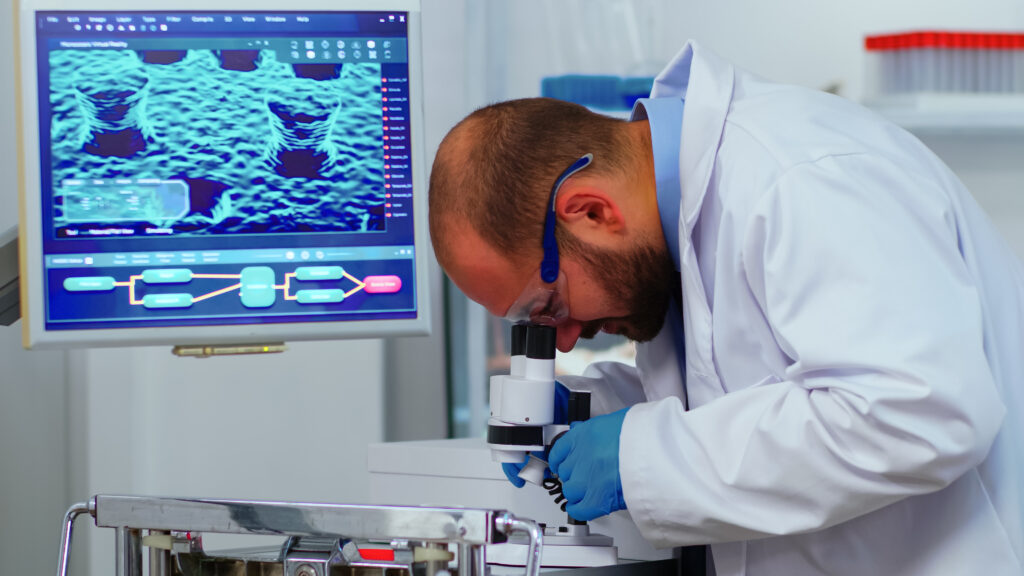
Preclinical investigator evaluating peptide reconstitution research data on a laboratory screen.

The Law of Diminishing Returns in Peptide Research: Why Less is Often More

The Critical Role of Biological Thresholds in Preclinical Assays  In laboratory assay configuration, an inaccurate assumption often persists that doubling the concentration of a chemical ligand automatically doubles the resulting cellular response. While linear scaling applies to simple chemical solutions, complex biological systems function under entirely different constraints. For preclinical investigators, laboratory technicians, and biochemists

Scroll to Top