The headline version of this story is that Samsung is moving into peptides. That is half right. The buyer is Samsung Biologics, a separately listed Korean contract manufacturer best known for producing antibody drugs for other companies, and what it is buying is not a peptide brand or a consumer product but a factory network: PolyPeptide Group, a Swiss-headquartered manufacturer of peptide active pharmaceutical ingredients for drug developers.
The status matters as much as the parties. On October 16, 2026, Samsung Biologics reported that holders of 87.59% of PolyPeptide’s shares had tendered into its CHF 44.31-per-share cash offer, clearing the two-thirds threshold, and declared the offer successful. That is not the same as completion. Settlement is expected to be deferred while regulatory approvals are obtained, and the company currently expects to close towards the end of 2026 or in the first quarter of 2027.
The argument of this post is that the deal is a manufacturing story, and a revealing one. A company that built its business on cell-culture biologics is paying roughly CHF 1.46 billion to acquire peptide chemistry expertise rather than build it, at a time when contract manufacturers across Europe, the U.S. and India are spending heavily on peptide capacity. What that signals, and what it does not, is set out below.
What Was Agreed, and Where It Stands
Samsung Biologics announced the all-cash public tender offer on July 20, 2026, acting through a newly formed Swiss subsidiary, Samsung Peptide AG. The price of CHF 44.31 per share implied an equity value of about CHF 1.46 billion, which Reuters converted to roughly US$1.81 billion (via DealStreetAsia). PolyPeptide’s independent directors unanimously recommended acceptance, and its largest shareholder, Draupnir Holding, which holds about 55.65% of the shares, committed in advance to tender its entire stake.
| Milestone | Date | Status |
|---|---|---|
| Market rumours; PolyPeptide acknowledges speculation | April 14, 2026 | Done |
| Offer pre-announced at CHF 44.31 per share | July 20, 2026 | Done |
| Offer prospectus published | August 31, 2026 | Done |
| Main offer period ends | October 12, 2026 | Done |
| Definitive interim result: 87.59% tendered, offer declared successful | October 16, 2026 | Done |
| PolyPeptide extraordinary general meeting | October 26, 2026 | Scheduled |
| Additional acceptance period | October 19–30, 2026 | Under way |
| Settlement (originally indicated for November 13) | Deferred pending approvals | Pending |
| Completion, then squeeze-out and SIX delisting | End-2026 or Q1 2027 (expected) | Pending |
Sources: Samsung Biologics, October 16, 2026; PolyPeptide news.
The distinction between “declared successful” and “completed” is the one most coverage blurs. The acceptance threshold has been met, so shareholders have effectively decided. The offer remains subject to other conditions, chiefly regulatory approvals in several countries, and only once those are satisfied does settlement happen and ownership transfer. Until then, PolyPeptide remains an independent, SIX-listed company.

Who the Two Companies Are
Samsung Biologics is a contract development and manufacturing organization, or CDMO. A CDMO does not sell medicines under its own name; drug developers pay it to develop manufacturing processes and produce their products at commercial scale. The company describes 845,000 litres of biomanufacturing capacity across its Korean campuses and a facility in Rockville, Maryland, with work spanning antibodies, fusion proteins, antibody-drug conjugates and mRNA (Samsung Biologics). It is part of the wider Samsung group but is a distinct listed company from Samsung Electronics.
PolyPeptide Group is also a CDMO, specialized in peptide-based active pharmaceutical ingredients. An active pharmaceutical ingredient, or API, is the biologically active substance in a medicine, before it is formulated into a finished product such as an injection pen or tablet. PolyPeptide traces its history to 1952, serves customers from preclinical through commercial stages, and reports significant exposure to metabolic disease programmes, including GLP-1 medicines. It operates six Mp-certified facilities across Europe, the U.S. and India, according to the company boilerplate published with the October offer update.
GMP, or good manufacturing practice, is the regulated quality system under which medicines for human use must be produced. It covers everything from facility design and process validation to batch records and release testing, and it is the main reason that manufacturing capacity for approved drugs cannot be added quickly.
Why a Biologics Manufacturer Wants Peptide Chemistry
Samsung Biologics’ stated rationale has three parts, all drawn from its July announcement and best read as company positioning rather than independently established outcomes.
Modality expansion. The company says the deal extends its capabilities beyond antibodies and antibody-drug conjugates into peptide therapeutics, which it describes as one of the fastest-growing parts of the biopharmaceutical industry.
Demand in obesity and diabetes, and beyond. It names demand for obesity and diabetes treatments, including GLP-1 therapies, as a driver, while also pointing to oncology and other emerging indications. The deal is plainly not only about weight-loss drugs, but the metabolic segment is the one both companies emphasize.
Geography. Its chief executive framed the deal as increasing Samsung Biologics’ reach in the U.S., Europe and India, where PolyPeptide’s sites are located.
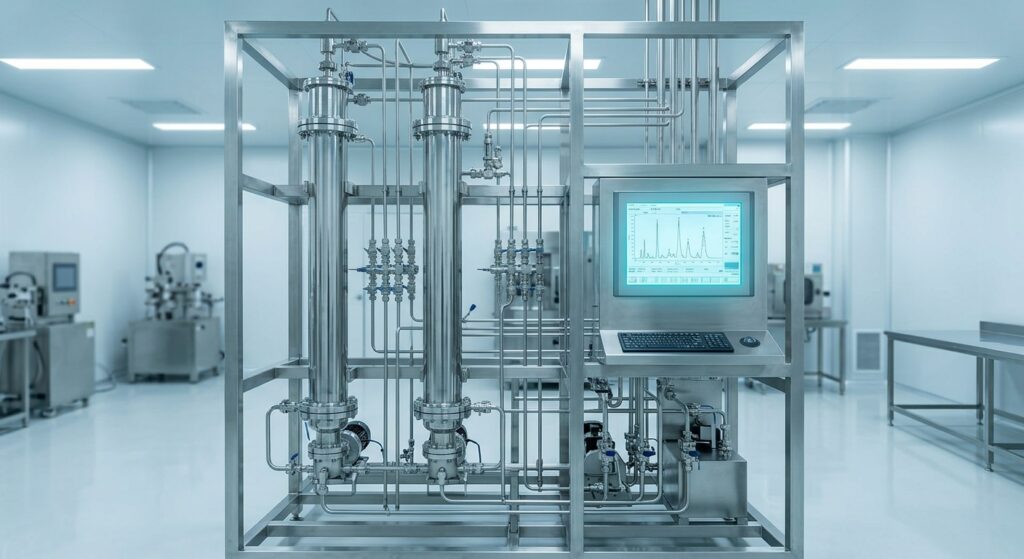
The less obvious part of the story is technical. Samsung Biologics’ existing capacity is measured in bioreactor litres because antibodies are made by living cells. Most therapeutic peptides are not. They are typically assembled chemically, one amino acid at a time, by solid-phase or liquid-phase synthesis, then purified at scale by preparative chromatography. That is a different discipline with different equipment, process know-how and regulatory history. Buying an established peptide manufacturer, with validated commercial processes and existing customer programmes, is a way to acquire that capability without spending years building and qualifying it from scratch. That last point is our analysis; neither company has framed it in those terms.
What PolyPeptide Brings
According to the acquirer, PolyPeptide contributes more than 70 years of API manufacturing heritage, over 1,000 therapeutic peptides produced, a pipeline of active projects with a substantial late-stage component, and a modular, automation-focused approach to adding capacity. Those are company claims and should be read as such.
What can be verified from the companies’ own disclosures is the footprint: manufacturing and development sites in Sweden, Belgium, France, the United States and India, a corporate office in Switzerland, and a separate innovation centre in Strasbourg. The business has also been growing quickly. PolyPeptide reported 42% revenue growth in the first half of 2026 and raised its full-year guidance to 25–30% revenue growth (PolyPeptide news).
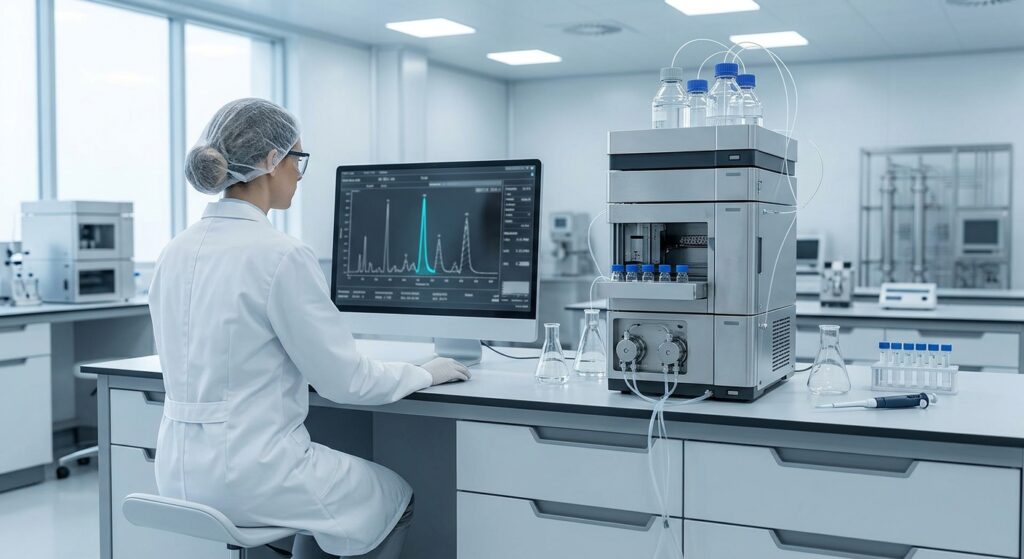
For drug developers, the value of a manufacturer like this is less about raw volume than about qualified volume. A peptide that works in a laboratory still needs a scalable synthesis route, a purification process that controls closely related impurities, analytical methods that can detect them, and a regulatory filing history that agencies will accept. The gap between a peptide that has been made and one that can be supplied commercially under GMP is the gap a CDMO is paid to close, a theme that runs through our guide to what a peptide certificate of analysis does and does not establish.
The Wider Capacity Race
The Samsung Biologics offer is the largest single move in a broader pattern. Industry trade coverage counts it among the largest CDMO acquisitions announced in 2026 (DCAT Value Chain Insights), and it sits alongside substantial organic investment by other peptide manufacturers.
| Company | Peptide investment reported | Source |
|---|---|---|
| Samsung Biologics | ~CHF 1.46B offer to acquire PolyPeptide | Samsung Biologics |
| CordenPharma | €900M over three years announced in 2024, later described as part of a more than €1B peptide programme | Fierce Pharma · DCAT |
| Bachem | New large-scale facility in Sisslerfeld, Switzerland, more than CHF 500M, tied to a large-volume supply agreement | DCAT |
| Neuland Laboratories | 7,000 L peptide module in India, about US$30M | ChemAnalyst |
Trade reporting consistently ties this spending to GLP-1 demand, and to a recognized shortage of facilities able to run complex, multi-step peptide synthesis at commercial scale. Independent market sizing varies widely, so we have not reproduced specific market forecasts here.
What It Signals, and What It Does Not
Some conclusions follow directly from the record. Others are interpretation, and are labelled as such.
Confirmed. Large, well-capitalized manufacturers are committing billions to peptide API capacity, both by acquisition and by construction, and the companies involved name metabolic disease medicines as a central driver.
Reasonable inference. Manufacturing capacity and quality systems, not discovery alone, have become a strategic bottleneck for peptide medicines. If a buyer with Samsung Biologics’ resources chose to acquire rather than build, the time and expertise needed to stand up qualified peptide manufacturing are evidently significant.
Possible, not established. Consolidation could reshape the competitive landscape for smaller peptide CDMOs and for drug developers choosing suppliers. Whether it changes pricing, lead times or supply for any particular medicine is not something the available information can answer.
Not signalled at all. The deal says nothing about the quality, safety or efficacy of any research compound, retailer or online seller, including this one. PolyPeptide manufactures GMP APIs for regulated drug programmes; research-grade material sold for laboratory use is a different supply chain with different documentation, as the regulatory gap discussed in our post on whether retatrutide is a drug or a biologic illustrates. Investment in pharmaceutical manufacturing validates pharmaceutical manufacturing, and nothing more.
Frequently Asked Questions
Q1: Has Samsung completed its acquisition of PolyPeptide?
Direct Answer: No. As of October 21, 2026, the tender offer has been declared successful after 87.59% of shares were tendered, but settlement awaits regulatory approvals and completion is expected towards the end of 2026 or in Q1 2027.
- Threshold: The 66⅔% minimum acceptance condition was met in the main offer period ending October 12.
- Still open: An additional acceptance period runs October 19–30, 2026.
- After closing: Samsung Biologics plans a squeeze-out of remaining shareholders and delisting from the SIX Swiss Exchange.
Q2: Is this Samsung Electronics?
Direct Answer: No. The buyer is Samsung Biologics, a separately listed Korean contract development and manufacturing organization, acting through its Swiss subsidiary Samsung Peptide AG.
- Listing: Samsung Biologics trades on the Korea Exchange (207940).
- Business: It manufactures biologic medicines such as antibodies for other drug companies.
- Group: It belongs to the wider Samsung group but is a distinct company.
Q3: What is a peptide CDMO?
Direct Answer: A contract development and manufacturing organization that develops production processes for peptide drug ingredients and manufactures them for pharmaceutical and biotech clients, rather than selling medicines under its own name.
- Development: Designing scalable synthesis and purification routes.
- Manufacturing: Producing active pharmaceutical ingredients under GMP from clinical to commercial scale.
- Regulatory: Supplying the documentation clients need for drug filings.
Q4: How much is Samsung Biologics paying for PolyPeptide?
Direct Answer: CHF 44.31 per share in cash, implying an equity value of about CHF 1.46 billion, or roughly US$1.81 billion at the exchange rate Reuters used in July 2026.
- Premium: About 40% above the undisturbed share price of CHF 31.65 on April 10, 2026.
- Recent trading: About 11.6% above the 60-day volume-weighted average before announcement.
- Support: The largest shareholder, holding about 55.65%, committed to tender.
Q5: Is the deal about GLP-1 drugs?
Direct Answer: Partly. Both companies cite obesity and diabetes treatments, including GLP-1 therapies, as a major source of peptide demand, but Samsung Biologics also names oncology and other emerging indications.
- Stated driver: Demand for peptide-based medicines in metabolic disease.
- Broader aim: Adding peptides as a new manufacturing modality alongside antibodies and ADCs.
- Geography: Expanding reach in the U.S., Europe and India.
Q6: Does the acquisition affect research peptides?
Direct Answer: There is no evidence that it does. PolyPeptide manufactures GMP active pharmaceutical ingredients for regulated drug programmes, and the transaction says nothing about research-grade compounds or the sellers who supply them.
- Different supply chains: Pharmaceutical GMP manufacturing and research-use supply operate under different requirements.
- No validation: Investment in drug manufacturing does not establish the quality of any research product.
- What to check instead: Batch-specific analytical documentation, as set out in our batch verification standards.
What Remains Open Until Closing
The facts that are settled are the price, the shareholder outcome, and the parties’ stated reasons. A large, diversified contract manufacturer has secured enough shareholder support to take control of one of the established peptide API specialists, and it has said plainly that peptide demand, metabolic disease in particular, is a central reason.
What is not settled is everything that depends on closing and integration: the timing and conditions of regulatory approvals, how PolyPeptide’s sites and customers fit into Samsung Biologics’ network, and whether the broader wave of peptide capacity investment proves well matched to future demand. Those questions will be answered over the coming quarters, not by the announcement. For now, the deal is best read as one more piece of evidence that qualified peptide manufacturing has become strategically valuable, and as no evidence at all about any product outside the regulated pharmaceutical supply chain it serves.
Ready to Advance Your Research?
Browse our catalog of verified research peptides, sourced and shipped exclusively within Canada. COAs available on request.
Disclaimer: All Peptide Wave products are intended strictly for laboratory research use only. Not approved for, nor intended for, human or veterinary consumption.