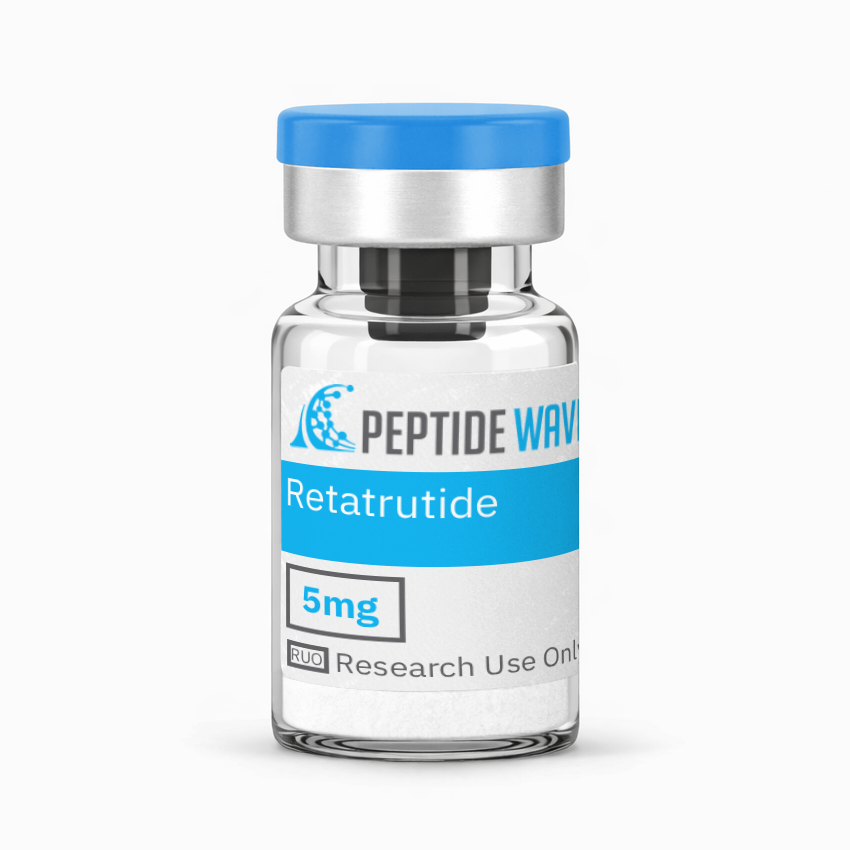
CAS Number: 2381089-83-2
Molecular Formula: C₂₂₄H₃₄₈N₄₈O₆₈
Molecular Weight: 4867.50 g/mol
Sequence: Modified 39-amino acid peptide with C20 fatty diacid chain at Lys¹⁰ (39 amino acids + fatty acid chain)
01
What Is RTA GLP-3?
Triple Receptor Agonist · Investigational
The next generation of metabolic medicine — a single peptide that activates three hormone receptors simultaneously for unprecedented weight loss and metabolic improvement. RTA GLP-3 is an experimental injectable peptide developed by Eli Lilly and Company. It belongs to a cutting-edge class of drugs called triple receptor agonists — meaning it activates three different hormone receptors in the body at the same time. No currently approved medication does this.
Think of it as the evolution of a class of drugs you may have heard of: Ozempic (semaglutide) targets one receptor. Mounjaro/Zepbound (tirzepatide) targets two. RTA GLP-3 targets three — which is why early trial results have produced weight loss numbers larger than anything seen in drug history.
It is administered as a once-weekly subcutaneous injection (under the skin) and is currently in Phase 3 clinical trials. It is not yet FDA approved.
02
How Does It Work?
Your body naturally produces three hormones that regulate hunger, blood sugar, and fat burning. RTA GLP-3 mimics and amplifies all three at once. Here’s what each one does:
GLP-1 Receptor
Tells your brain you’re full. Slows digestion so food stays in your stomach longer. Stimulates insulin release when blood sugar is high. This is the same pathway Ozempic works through.
GIP Receptor
Works alongside GLP-1 to further amplify insulin release and reduce appetite. Also plays a role in fat cell regulation. This is the second target added by Mounjaro/Tirzepatide.
Glucagon Receptor
The key addition that makes RTA GLP-3 unique. Glucagon tells the liver to burn fat directly, increases the body’s calorie burn at rest (thermogenesis), and drives fat out of the liver — something GLP-1 alone cannot do.
Together, these three pathways work on appetite, blood sugar, and fat metabolism simultaneously — attacking obesity from multiple angles at once rather than just one.
03
Health Benefits Being Researched
Weight Loss — Historic Results
In Phase 2 trials, participants on the highest dose (12 mg) lost an average of 24.2% of their body weight in 48 weeks — the largest average weight loss ever reported for any obesity medication in a clinical trial. That’s roughly 58 lbs for a 240 lb person. Placebo groups lost only ~2%.
Type 2 Diabetes & Blood Sugar Control
In a Phase 2 diabetes trial, 77–82% of participants on RTA GLP-3 achieved normal blood sugar levels (HbA1c ≤ 6.5%) within 36 weeks — an extraordinary result in diabetes medicine. It also outperformed dulaglutide, a widely-used diabetes drug, on every key measure. Additionally, 72% of prediabetic participants reverted to completely normal blood sugar.
Cardiovascular Health
Trial participants showed meaningful improvements in blood pressure (both systolic and diastolic), LDL cholesterol (down ~20%), triglycerides, fasting insulin, and waist circumference. LDL reductions are thought to be driven by the glucagon receptor’s effect on a protein called PCSK9, which controls cholesterol clearance.
Fatty Liver Disease (MASLD/MASH)
Because the liver is rich in glucagon receptors — which GLP-1 drugs cannot access — RTA GLP-3 can directly target liver fat. A Phase 2a trial in Nature Medicine found it produced up to an 82% reduction in liver fat. It also appears to ease oxidative stress in liver cells and may help reduce liver fibrosis (scarring), making it potentially the first metabolic drug to address advanced liver disease directly.
Increased Calorie Burn at Rest
Unlike GLP-1 drugs that mainly reduce calories in, RTA GLP-3’s glucagon component also increases calories burned through thermogenesis — the body’s ability to generate heat and burn energy. This dual action (less in, more out) is a key reason its weight loss numbers surpass previous drugs.
Potential Anti-Cancer Effects (Preclinical)
Early animal research suggests that RTA GLP-3-induced weight loss reduced tumor growth in pancreatic and lung cancer models — with greater tumor suppression than semaglutide. Researchers observed lasting immune reprogramming even after partial weight regain. This is very early-stage and not yet studied in humans.
04
How Does It Compare?
Average weight loss across major obesity medications in clinical trials:
RTA GLP-3
24.2%
Tirzepatide
~21%
Semaglutide
~15%
Older GLP-1s
~7%
Note: These are comparisons from separate trials with different designs. No direct head-to-head data has been published yet.
05
Safety & Side Effects
The safety profile of RTA GLP-3 is generally consistent with other GLP-1 class medications. The most common side effects are gastrointestinal and are typically mild-to-moderate, transient, and dose-dependent — meaning they are more common at higher doses and tend to improve over time.
Important: GI side effects were significantly worse when patients started at a high dose immediately. A slow, gradual titration starting at 1 mg nearly eliminated this problem — making the titration schedule critically important.
Like other weight loss drugs, there is a concern about lean muscle mass loss. Studies suggest 25–40% of weight lost may come from lean tissue, making resistance training and adequate protein intake important during treatment.
06
Current Status
Phase 3 clinical trials are currently underway, projected to continue through 2025–2026. RTA GLP-3 is not FDA approved and is only available through clinical trials at this time. FDA approval — if Phase 3 results confirm Phase 2 findings — is expected to take several more years due to the requirement for extensive long-term safety data.
It was developed by Eli Lilly and Company, the same pharmaceutical company behind Mounjaro and Zepbound (tirzepatide). If approved, it would be administered as a once-weekly subcutaneous injection, similar to existing GLP-1 medications.
References & Further Reading
New England Journal of Medicine — Triple-Hormone-Receptor Agonist RTA GLP-3 for Obesity: Phase 2 Trial (2023)
PMC / MDPI — RTA GLP-3: A Game Changer in Obesity Pharmacotherapy (2025)
PMC — Triple Agonism Based Therapies for Obesity: Review (2025)
PMC — Efficacy and Safety of RTA GLP-3: Systematic Review & Meta-Analysis (2025)
Nature Medicine — RTA GLP-3 for Fatty Liver Disease (MASH): Phase 2a Trial (2024)
The Lancet — RTA GLP-3 for Type 2 Diabetes: Phase 2 Trial (2023)
Wikipedia — RTA GLP-3 Overview
BodySpec — RTA GLP-3 Dosage & Titration Guide (2025)
Reviews
There are no reviews yet.