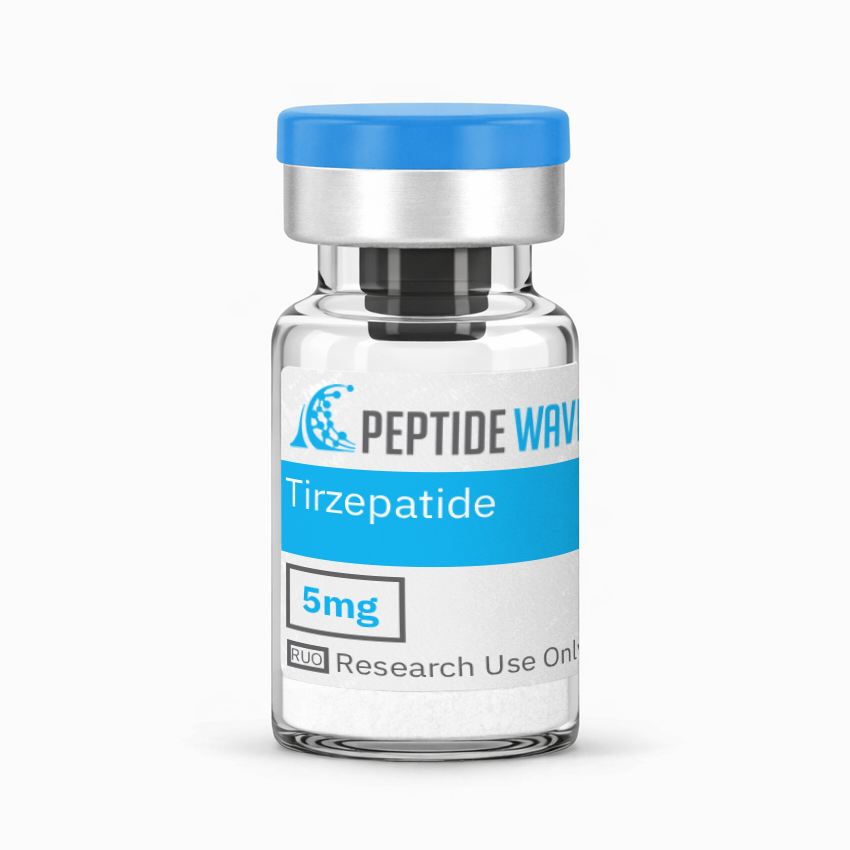
CAS Number: 2023788-19-2
Molecular Formula: C₂₂₅H₃₄₈N₄₈O₆₈S
Molecular Weight: 4813.47 g/mol
Sequence: Modified 39-amino acid peptide with C20 fatty diacid chain at Lys²⁰ (39 amino acids + fatty acid chain)
What is TRZ GLP-2?
A dual agonist that simultaneously activates two hormone receptors — GLP-1 (glucagon-like peptide-1) and GIP (glucose-dependent insulinotropic polypeptide) — earning it the nickname “twincretin.” It was FDA-approved in 2022 for type 2 diabetes and in 2023 for chronic weight management in obesity. By stimulating both receptors, it reduces appetite, slows gastric emptying, improves insulin sensitivity, and promotes fat loss — producing greater weight loss than GLP-1-only drugs.
Areas of Active Research:
1. Weight Loss & Obesity 🏋️
Over 72 weeks, TRZ produced significant weight reduction ranging from 5% to 20.9% across different trials in a dose-dependent manner, with fat mass reduction being the primary driver of weight loss. It also significantly decreased food intake and reduced overall appetite scores. ScienceDirect
In a direct head-to-head phase 3b trial (SURMOUNT-5), TRZ was superior to semaglutide in reducing body weight and waist circumference at 72 weeks among people with obesity but without diabetes. New England Journal of Medicine
2. Type 2 Diabetes & Blood Sugar Control 🩸
TRZ demonstrated favorable glycemic control, with notable reductions in HbA1c levels ranging from 20.4 mmol/mol with the 5 mg dose to 28.2 mmol/mol with the 15 mg dose, following treatment durations of 40–52 weeks. ScienceDirect
Modelling studies project that TRZ could reduce roughly 20,850 incident cases of diabetes per 100,000 individuals over a lifetime. PubMed
3. Cardiovascular Disease ❤️
A large real-world study from Mass General Brigham, published in Nature Medicine, found that both TRZ and semaglutide reduced the risk of heart attack, stroke, and death from any cause. Compared with a diabetes drug with neutral cardiovascular effects, TRZ lowered the risk of stroke, heart attack, and death by 13%. Mass General Brigham
Over a lifetime, TRZ is projected to reduce roughly 10,650 cardiovascular disease cases per 100,000 individuals. PubMed
4. Heart Failure
In the SUMMIT trial, patients with obesity and heart failure with preserved ejection fraction (HFpEF) taking TRZ had a 38% lower rate of cardiovascular death or worsening heart failure compared to placebo at one year. This benefit was observed similarly in patients with and without chronic kidney disease. American College of Cardiology
5. Obstructive Sleep Apnea (OSA)
In two phase 3 SURMOUNT-OSA trials involving adults with moderate-to-severe OSA and obesity, TRZ significantly reduced the apnea-hypopnea index (the measure of breathing disruptions per hour of sleep) — by approximately 20 events/hour in trial 1 and 23.8 events/hour in trial 2 — compared to placebo after 52 weeks. New England Journal of Medicine This was notable enough that the FDA approved TRZ for this indication.
6. Kidney Disease 🩺
Analysis from the SUMMIT trial showed that TRZ improved kidney function markers among patients with obesity, chronic kidney disease, and HFpEF. Researchers plan to continue studying the molecular mechanisms behind the drug’s interplay with obesity, kidney disease, and heart failure. American College of Cardiology
7. Lipid Profile & Inflammation 🧬
TRZ has a beneficial impact on cholesterol, including reductions in total cholesterol, LDL cholesterol, and triglyceride levels, while increasing HDL (“good”) cholesterol concentrations. ScienceDirect
Research is also underway specifically examining TRZ‘s anti-inflammatory effects, as these have been less studied compared to its metabolic and weight-loss benefits. PubMed
8. Liver Disease (NAFLD/NASH)
Preliminary studies suggest that TRZ can improve hepatic inflammation and may even reverse fibrosis, offering a potential therapeutic avenue for non-alcoholic fatty liver disease (NAFLD) and non-alcoholic steatohepatitis (NASH). Given limited treatment options for these conditions, researchers are working to confirm these benefits and establish clinical guidelines. PubMed Central
9. Addiction & Mental Health 🧠
Evolving research suggests TRZ may be among the first effective “anti-consumption” agents, with potential applications in reducing food cravings, alcohol consumption, nicotine addiction, and recreational drug use — effects linked to its influence on the brain’s reward pathway. PubMed
⚠️ Important Caveat: Benefits May Reverse After Stopping
Most individuals who discontinued TRZ regained at least 25% of lost weight within a year of stopping, with about half regaining 50% or more. Cardiometabolic improvements — including blood pressure, lipids, and glycemic measures — also reversed in line with weight regain. MedicalXpress This suggests TRZ may need to be taken long-term to maintain its benefits. No drug or supplement is replacement for a healthy lifestyle.
Reviews
There are no reviews yet.