The Critical Role of Biological Thresholds in Preclinical Assays
In laboratory assay configuration, an inaccurate assumption often persists that doubling the concentration of a chemical ligand automatically doubles the resulting cellular response. While linear scaling applies to simple chemical solutions, complex biological systems function under entirely different constraints. For preclinical investigators, laboratory technicians, and biochemists trying to design highly accurate models, recognizing these biological boundaries is essential to maintaining data precision and avoiding material waste.
Setting the baseline for any structured testing environment begins during peptide reconstitution research. When preparing testing solutions using a bacteriostatic water reconstitution guide, investigators must calculate fluid values based on the specific receptor kinetics of the target cells. Flooding an assay with an excessive concentration of a compound does not trigger infinite biological signaling. Instead, cellular pathways face a firm ceiling where adding more compound yields no additional research data.
This educational guide explores the strict biochemical limits that govern ligand binding. We will analyze how receptor saturation, cellular desensitization, and chemotactic gradient flatlining occur across specific BPC-157 research studies and secretagogue protocols. By evaluating the cellular mechanics of diminishing returns, researchers can reliably locate the optimal concentration sweet spot (EC50) for maximum data reproducibility.
The Molecular Ceiling: Receptors and Ligand Kinetics
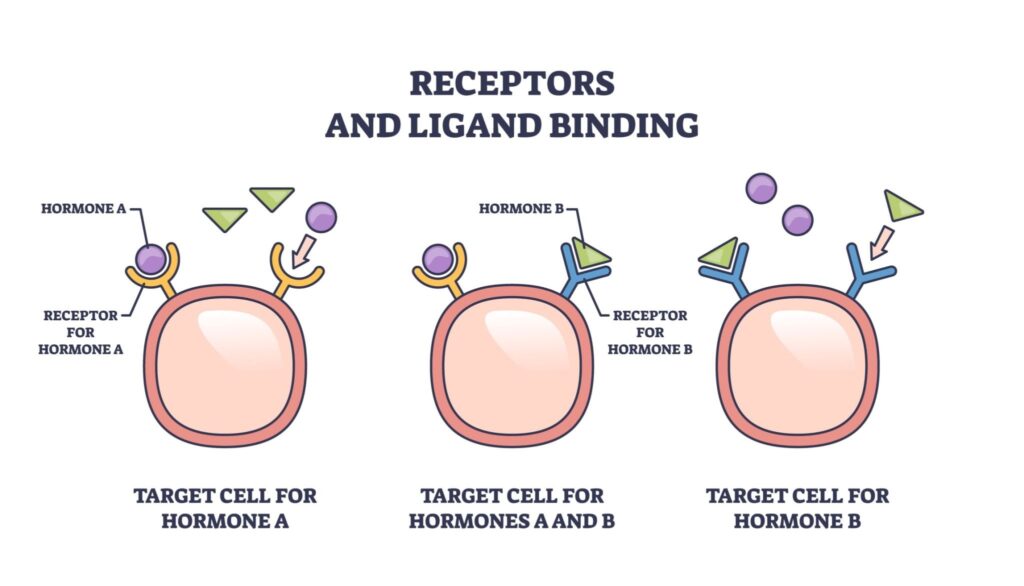
Biological signaling relies entirely on the successful pairing of a mobile molecule (the ligand) with a stationary docking station on a cell membrane (the receptor). This interaction follows a clear mathematical plateau.
The Science of Saturation
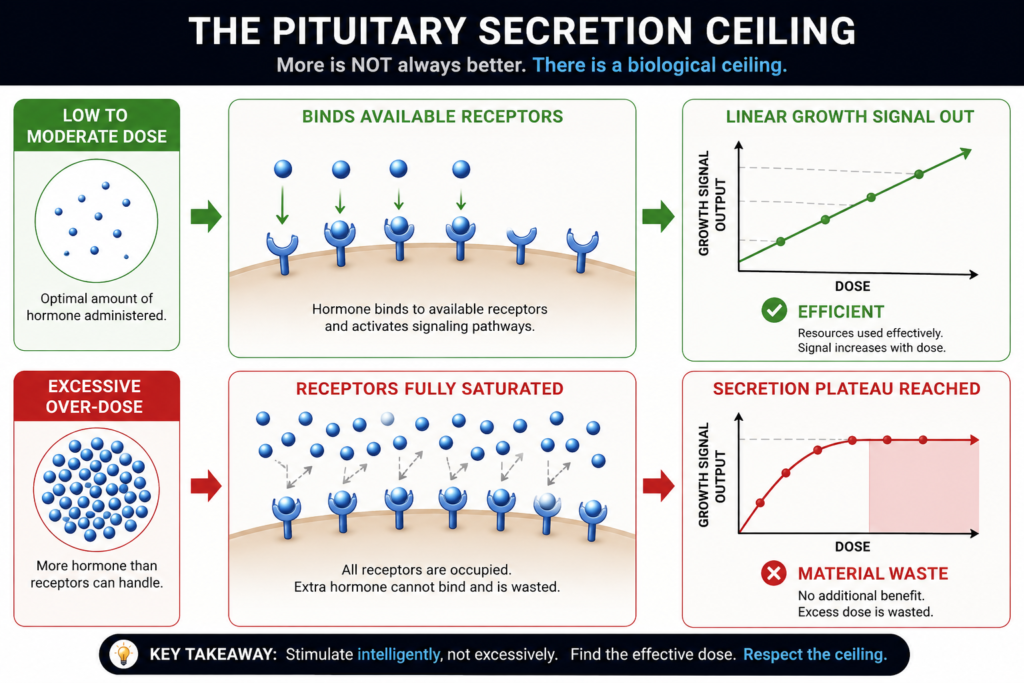
Cell surfaces hold a finite number of active target receptor sites. When a low concentration of liquid peptide is introduced, the relationship between dosage and response is relatively linear because many docking sites remain empty. However, as the compound concentration increases, a higher percentage of these sites become occupied.
Once every single available receptor site on the cell membrane is bound by a peptide, the system achieves 100% saturation. At this exact point, any additional free-floating molecules in the surrounding medium are effectively blinded. They have nowhere to dock, meaning they cannot trigger any further downstream cellular signals.
Understanding Receptor Downregulation
Cells maintain strict internal stability. When a cell surface is bombarded by a persistent, high-density concentration of a peptide, the cell views this over-saturation as an external stressor. To protect itself from hyper-stimulation, the cell actively pulls its surface receptors back inside the cellular membrane through a process called internalization. This downregulation temporarily reduces the cell’s overall sensitivity, leaving fewer active docking ports available for future testing cycles.
Tachyphylaxis and Desensitization
In addition to physically removing receptors, rapid high-dose exposure can desensitize the remaining active sites. The continuous binding of excess ligands causes the internal signaling machinery of the cell to decouple from the surface receptor. This rapid onset of short-term tolerance means that subsequent exposures to the peptide yield a diminished or completely absent response, introducing significant statistical noise into long-term laboratory data.
Physiological Plateaus in Growth Secretagogue Protocols
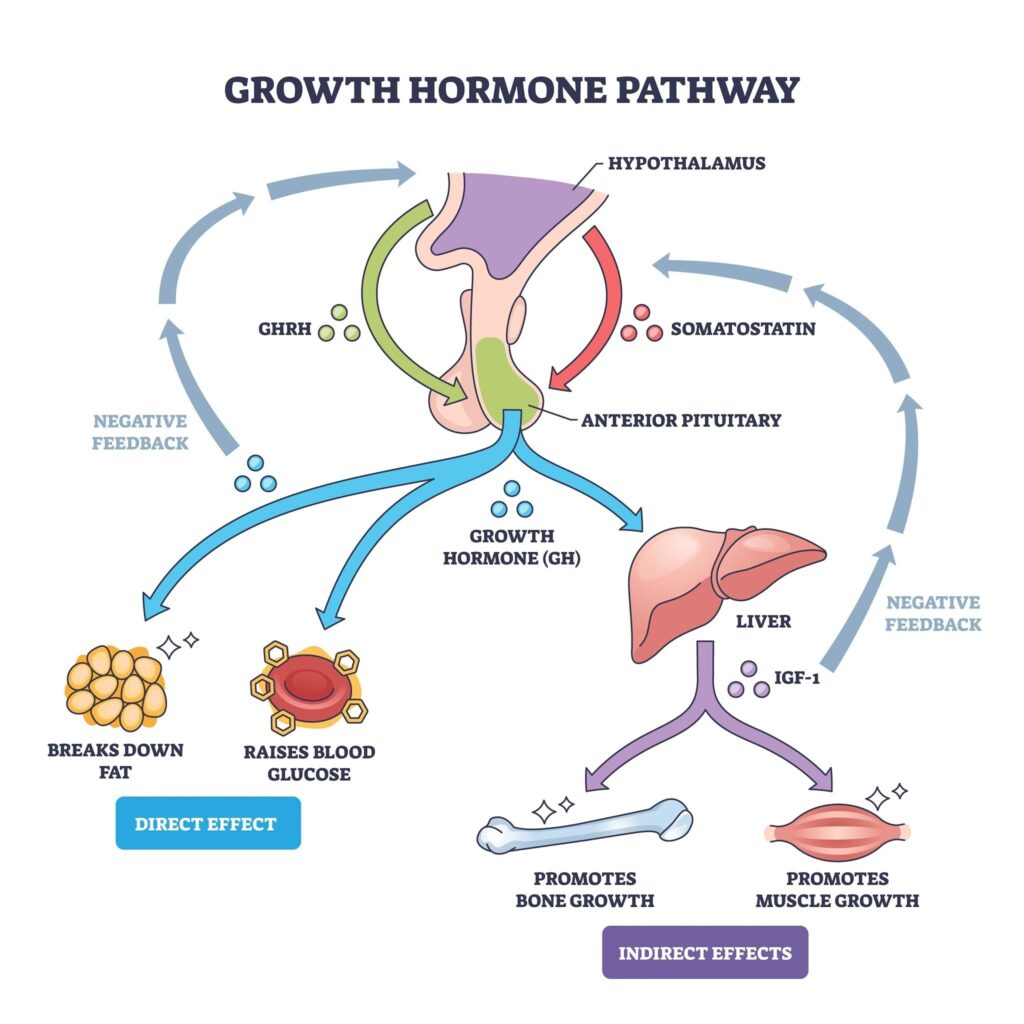
Growth hormone releasing analogs provide a clear, real-world example of receptor saturation ceilings within cellular biology. Because the endocrine axis relies on strict, natural feedback loops, these structures are highly prone to plateaus when overloaded.
Focus on Pituitary Axis Analogs
When conducting Ipamorelin selective secretagogue research, investigators study specific pathways designed to prompt the release of growth factors from pituitary cells. Pushing the concentration of an CJC-1295 no DAC research sample or a combined CJC-1295 Ipamorelin combination research model beyond the receptor threshold will not force the target cells to produce an infinite volume of signaling proteins.
The somatotropic cells in the anterior pituitary possess a natural physical ceiling regarding their storage and secretion capacity. Once the optimum concentration is reached, the cellular machinery maxes out.
Material Waste and Feedback Interference
Any excess peptide added beyond this biological ceiling cannot be used by the cells. The unreacted compound simply floats in the media until it is broken down by clearance enzymes. Pushing concentrations past this point does not improve experimental yields; it merely accelerates material depletion and increases the risk of triggering unintended secondary feedback pathways that obscure the true data line.
Chemotactic Washout in Tissue Repair Models
The law of diminishing returns becomes a physical bottleneck in cellular movement and structural repair studies, where the direction of cellular migration is just as important as the speed.
Disrupting Signaling Gradients
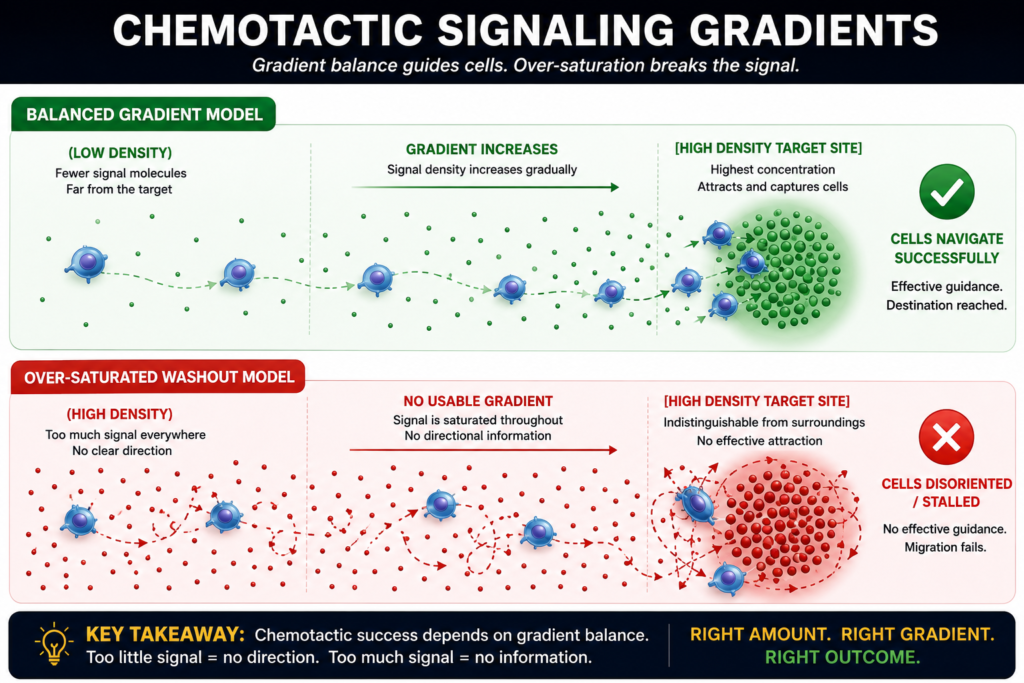
In a baseline BPC-157 mechanism of action study or during broader Thymosin Beta-4 research, cells depend on a clear concentration gradient to navigate. In a live laboratory assay, repairing cells track the peptide from areas of low density toward areas of high density, using the changing concentration like a map to locate the target repair site.
The Washout Effect
If a researcher introduces an excessively high dose of the peptide into the environment, the local area instantly becomes evenly saturated. This over-saturation completely flattens the signaling gradient. Because the concentration is identical everywhere, the cells lose their sense of direction and stall. This biological “washout” completely stops cell migration, leading to the false experimental conclusion that the peptide is ineffective, when the failure was actually caused by an excessive dose.
The Multi-Ligand Bottleneck
This signaling breakdown is further complicated when running a BPC-157 TB-500 combination research protocol or studying an isolated TB-500 mechanism. When multiple repair sequences are introduced simultaneously at high concentrations, they begin to crowd the cellular environment. The different molecular chains experience competitive binding, physically blocking one another from accessing shared secondary receptor paths and causing a sharp drop in overall experimental efficacy.

Metabolic Load, Secondary Stress, and Homeostatic Displacement
Every cell functions inside a delicate biochemical equilibrium. Flooding an assay with unnecessary molecular mass forces the cell to redirect its energy away from signaling and toward structural waste management.
Metabolic Accumulation
Peptides are temporary molecules that must be broken down by cellular enzymes once their signaling task is complete. When an assay is over-saturated, the rate of peptide accumulation easily outpaces the cell’s natural enzymatic clearing capacity. This backlog leaves un-cleaved peptide fragments sitting in the testing medium, where they can slowly alter the local microenvironment, shift the pH, and introduce unwanted background variables.
Homeostatic Balance
This risk is particularly critical in NAD+ cellular metabolism research and glutathione antioxidant mechanism studies, which focus on delicate metabolic balances. These pathways are managed by sensitive enzymatic feedback loops designed to keep the cell in perfect equilibrium. Overloading these systems with excessive concentrations forces the cell to initiate counter-reactive stress protocols, skewing baseline data and ruining the reproducibility of the assay.
High Concentration Risks vs. Optimized Protocol Benefits
| Research Variable | High-Dose Over-Saturation | Optimized Baseline (EC50) |
| Receptor Status | Internalized / Desensitized | Highly receptive and responsive |
| Data Signal | Systemic noise and feedback interference | Clean, distinct, and linear |
| Material Waste | High cost, unreacted compound clearance | High efficiency, optimized material usage |
| Local Microenvironment | Metabolic byproduct buildup | Normal cellular homeostasis |
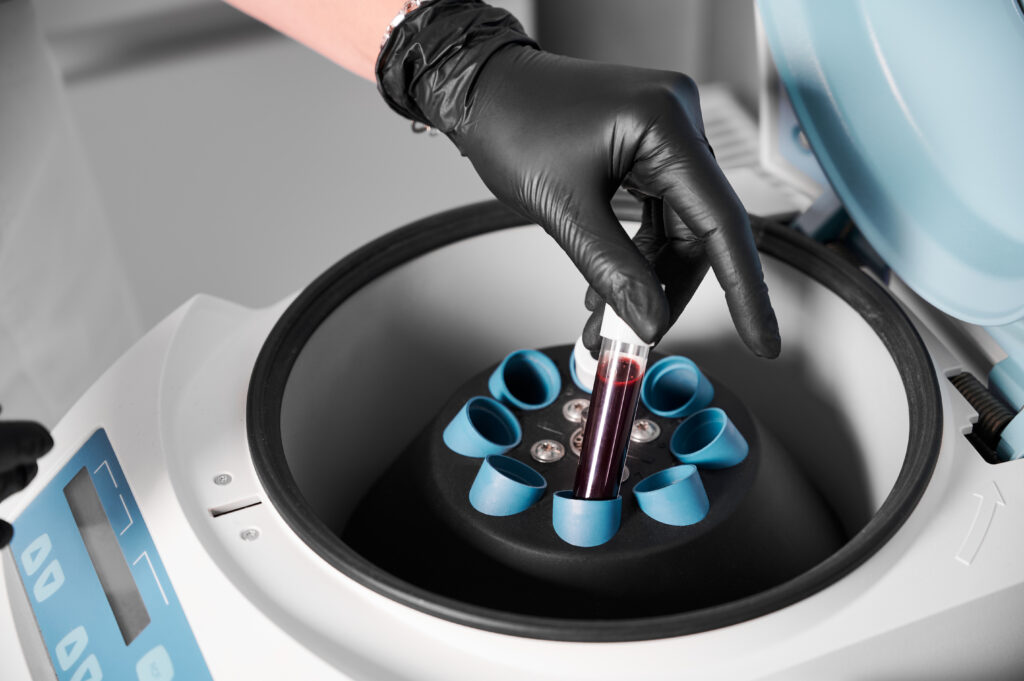
In preclinical peptide research, more is rarely better; precision remains the definitive target. Pushing testing concentrations beyond the natural threshold of biological returns causes rapid receptor exhaustion, flattens necessary chemotactic gradients, and triggers metabolic stress loops that mask the true properties of the compound. When an assay is over-saturated, the resulting data reflects a cellular distress response rather than the authentic mechanism of the peptide. Designing laboratory protocols around calculated saturation limits preserves compound integrity, protects cellular equilibrium, and guarantees that your data outcomes remain clear, accurate, and highly reproducible.
Key Takeaways for Lab Protocol Optimization
- Respect the Receptor Ceiling: Cells possess a finite number of docking ports. Pushing dosage past 100% receptor saturation yields zero additional biological data and triggers receptor internalization.
- Protect the Signaling Gradient: Tissue repair models rely on directional pathways. Avoid high-dose over-saturation that flattens these gradients, which causes chemotactic washout and disorients target cells.
- Target the EC50 Sweet Spot: Optimize your research by identifying the half-maximal effective concentration rather than chasing maximum thresholds. This practice reduces metabolic waste and eliminates systemic noise.
Ready to Advance Your Research?
Browse our catalog of verified research peptides, sourced and shipped exclusively within Canada. COAs available on request.
Disclaimer: All Peptide Wave products are intended strictly for laboratory research use only. Not approved for, nor intended for, human or veterinary consumption.