While GLP-1 receptor agonists and emerging multi-agonist therapies represent a monumental breakthrough in metabolic medicine, commercial narratives focus almost exclusively on rapid scale weight reduction. Beyond the clinical headlines lies a complex network of physiological trade-offs requiring careful navigation. Without a muscle-first lifestyle framework, targeted protein intake, and heightened awareness of gastrointestinal, surgical, and metabolic risks, individuals risk exchanging obesity or adiposity for accelerated sarcopenia, nutrient depletion, and long-term physical frailty. Read on to explore the underlying physiological realities, multi-agonist pipelines, muscle-preservation protocols, and pre-surgical safeguards essential for navigating the incretin era safely.
Celebrating the Breakthrough Without Miracle Myopia
The introduction of incretin receptor agonists has fundamentally altered the landscape of metabolic medicine. Pharmacological innovations targeting glucagon-like peptide-1 (GLP-1) pathways have demonstrated profound efficacy in glycemic management, cardiovascular risk reduction, and weight management. For millions managing chronic metabolic conditions, these compounds represent a major therapeutic shift, offering unprecedented control over systemic glucose homeostasis and central appetite signaling.
However, a balanced scientific evaluation requires looking beyond popularized media narratives. Every potent pharmacological intervention introduces distinct physiological trade-offs. While the rapid reduction in total body mass is frequently celebrated, the qualitative composition of that loss and the underlying systemic adaptations demand equal scrutiny. Achieving substantial weight reduction is not inherently synonymous with optimizing long-term health if lean tissue integrity and digestive function are compromised in the process.
A critical narrative distinction must be drawn between symptom management and resolving foundational root causes. While incretin therapies effectively modulate central satiety signaling, gastric transit time, and insulin secretion, they do not automatically resolve the underlying environmental, dietary, and lifestyle drivers of metabolic dysfunction. Treating appetite suppression as a standalone solution risks overlooking the structural foundations required for long-term health and vitality.

Beyond Diabetes & Obesity: Body Composition and Off-Label Uses
While regulatory approvals primarily center on chronic weight management and type 2 diabetes, clinical observation and anecdotal reports highlight an expanding cohort of individuals utilizing GLP-1 receptor agonists for broader body composition goals. This includes individuals seeking modest weight reduction, aesthetic body recomposition, or secondary metabolic refinement despite presenting without clinical obesity.
Preliminary reports and observational discussions point toward growing interest in these agents for optimizing lipid profiles, such as modulating low-density lipoprotein (LDL), maintaining lower adiposity levels, or achieving specific cosmetic body composition targets. The central mechanisms of appetite dampening, reduced food reward, and delayed gastric emptying occur universally upon receptor binding, irrespective of an individual’s starting metabolic status or baseline body fat percentage.
Pharmacological mechanisms operate universally across human physiology. Whether a compound is administered in clinical obesity or for minor body composition adjustments, the physiological trade-offs remain constant. Caloric restriction induced by pharmacological appetite suppression influences tissue turnover, digestive motility, and nutrient balance in every individual, making structured lifestyle management indispensable regardless of starting point.
The Pharmaceutical Pipeline: The Race from Single to Quintuple Agonists
Driven by massive global demand and intense commercial interest, pharmaceutical research has initiated an energetic wave of development in metabolic engineering. Multi-receptor targeting represents the current frontier, moving away from single-pathway incretin mimetics toward complex multi-agonist molecules engineered to engage several metabolic signaling cascades simultaneously.
The research trajectory has progressed from single GLP-1 receptor agonists to dual agents targeting GLP-1 alongside glucose-dependent insulinotropic polypeptide (GIP) or glucagon, triple agents incorporating all three pathways, and early-stage quintuple pathway targets. Stacking receptor targets aims to compound central satiety signals, elevate resting energy expenditure, and optimize tissue-specific insulin sensitivity.
Evolution of Incretin Therapies: Single to Multi-Agonist Pipeline Progression
| Agonist Class | Target Receptors | Primary Biological Focus / Synergy | Approved Medications | Key Pipeline & Investigational Compounds |
| Single Agonist | GLP-1 | Central satiety signaling, delayed gastric transit, glucose-dependent insulin release. | • Semaglutide (Ozempic / Wegovy / Rybelsus) • Liraglutide (Victoza / Saxenda) • Dulaglutide (Trulicity) • Lixisenatide (Adlyxin) | • Orforglipron (Oral non-peptide) • Ecnoglutide • Aleniglipron (GSBR-1290) |
| Single Agonist (Adjacent Class) | Amylin / Calcitonin Axis | Slows gastric emptying, suppresses postprandial glucagon, and reinforces central fullness independent of GLP-1. | • Pramlintide (Symlin) | • Cagrilintide (Long-acting DACRA) • Petrelintide • Eloralintide • AZD6234 |
| Dual Agonist | GLP-1 + GIP | Adds GIP to enhance adipose lipid buffering, improve systemic insulin sensitivity, and reduce GI intolerance. | • Tirzepatide (Mounjaro / Zepbound) | • VK2735 (Phase 3) • BGM0504 |
| Dual Agonist | GLP-1 + Glucagon | Adds Glucagon pathway activation to increase hepatic fat oxidation (lipolysis) and resting energy expenditure. | — | • Survodutide (Phase 3) • Mazdutide • Pemvidutide (Phase 2) |
| Dual Agonist | GLP-1 + Amylin | Dual-pathway satiety signaling, combining incretin and calcitonin receptor mechanisms in a single molecule. | — | • Amycretin (Phase 2/3) |
| Triple Agonist | GLP-1 + GIP + Glucagon | Combines central appetite suppression (GLP-1), insulin sensitivity/lipid buffer (GIP), and active energy expenditure (Glucagon). | — | • Retatrutide (Phase 3 TRIUMPH trials) |
| Quintuple Agonist | GLP-1 + GIP + Glucagon + Amylin + Calcitonin | Complex multi-receptor engagement attempting comprehensive metabolic rewiring across metabolic and hormonal axes. | — | • VRX-0075 (Preclinical / Early research) |
| Quintuple Agonist | GLP-1 + GIP + PPARα/γ/δ | Merges triple incretin/hormone signaling with nuclear receptors to target insulin resistance and lipid dysregulation at the cellular level. | — | • GLP-1-GIP-Lani (Preclinical mouse models) |
Jastreboff and colleagues (2023) reported that retatrutide produced least-squares mean body weight changes of −17.5% at 24 weeks in the 12-mg group in a phase 2 trial. As pipeline candidates push total mass reduction percentages higher through multi-receptor synergy, examining the rate and cellular nature of tissue loss becomes increasingly critical. Higher rates of overall mass reduction inherently increase the physiological demand for structural protein preservation, as the body readily catabolizes lean tissue under extreme energy deficits.

Mechanism Breakdown: Semaglutide, Tirzepatide, and Retatrutide
Semaglutide selectively binds to and activates the GLP-1 receptor, mimicking endogenous incretin signaling. Its primary physiological actions include glucose-dependent insulin secretion, glucagon suppression, slowing of gastric transit time, and direct activation of hypothalamic satiety centers to reduce overall energy intake. By dampening reward-related food signals in the central nervous system, it effectively quiets intrusive thoughts regarding eating.
Tirzepatide is a synthetic peptide engineered to activate both GLP-1 and GIP receptors. By co-activating GIP pathways, it enhances insulin sensitivity and adipose tissue lipid buffering capacity, operating synergistically with GLP-1 satiety signaling. This dual engagement yields superior glycemic control and more pronounced total body mass reduction compared to single-receptor activation alone.
Retatrutide expands target engagement to three distinct receptors: GLP-1, GIP, and the glucagon receptor. While GLP-1 and GIP suppress energy intake and refine glycemic regulation, glucagon receptor activation increases hepatic energy expenditure and lipid catabolism. This triple mechanism significantly accelerates energy turnover and body mass reduction, pushing the limits of non-surgical metabolic interventions.
Comparative Biological Mechanisms of Semaglutide, Tirzepatide, and Retatrutide
| Peptide Name | Target Receptors | Metabolic Focus | Primary Mechanisms & Biological Actions | FDA Approval Status |
| Semaglutide (Ozempic, Wegovy) | GLP-1 (Single Agonist) | Appetite Suppression | • Delays gastric emptying (food stays in stomach longer) • Activates brain satiety centers (reduces “food noise”) • Stimulates glucose-dependent insulin release | Approved (Type 2 Diabetes & Weight Loss) |
| Tirzepatide (Mounjaro, Zepbound) | GLP-1 + GIP (Dual Agonist) | Appetite Control + Lipid Efficiency | • Includes all GLP-1 effects • Synergy via GIP receptor: improves insulin sensitivity and adipose (fat) tissue lipid buffering • Reduces GI intolerance compared to single-agent escalation | Approved (Type 2 Diabetes, Weight Loss, & Sleep Apnea) |
| Retatrutide (Investigational) | GLP-1 + GIP + Glucagon (Triple Agonist) | Appetite Control + Lipid Efficiency + Active Energy Expenditure | • Includes all GLP-1 and GIP effects • Glucagon activation: increases resting energy expenditure (REE) and accelerates liver fat oxidation (lipolysis) | Investigational (Phase 3 TRIUMPH trials) |
The Muscle Mass Trade-Off: Sarcopenia, Aging, and Baseline Risk
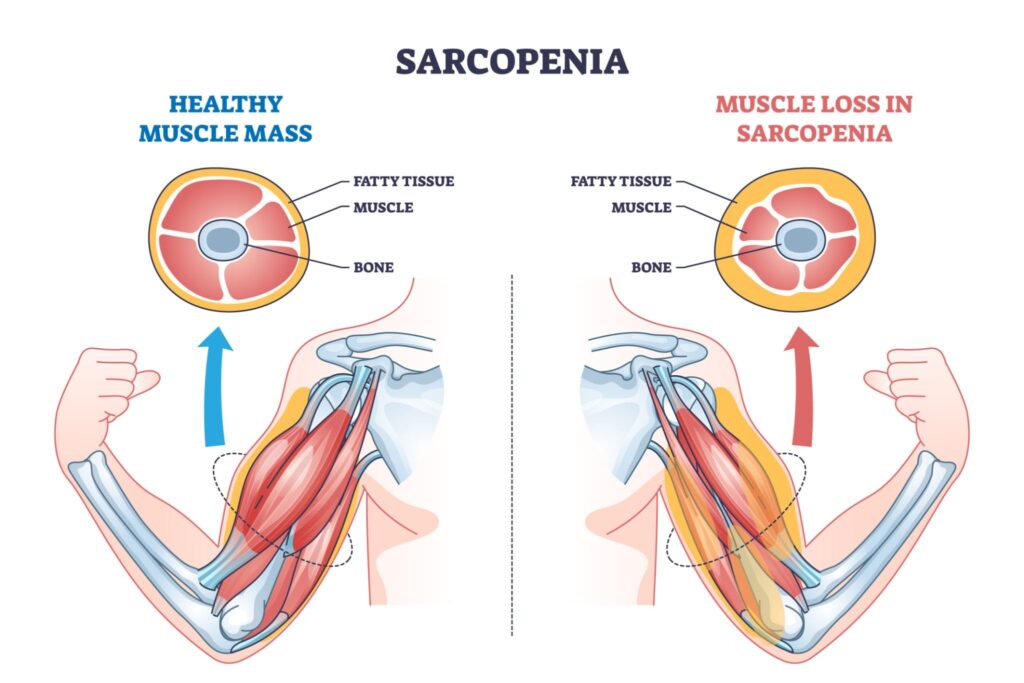
Research indicates that during rapid, pharmacologically induced weight loss, a substantial fraction of total mass lost consists of lean tissue. Clinical trials analyzing body composition changes report that lean mass loss can account for 25% to 40% of total weight reduction when unmitigated by structured resistance exercise and nutritional interventions. This catabolic rate poses a major threat to long-term physical function.
Skeletal muscle tissue is not merely structural; it is the human body’s primary site for postprandial glucose disposal and a major determinant of resting metabolic rate (RMR). Significant reductions in skeletal muscle mass lower basal energy expenditure, reduce systemic insulin storage capacity, and compromise physical strength, making baseline metabolic maintenance progressively more difficult.
In aging populations, age-related sarcopenia already presents significant health risks. When accelerated by rapid energy deficits, lean mass depletion heightens physical frailty, joint instability, balance impairment, and fracture risk. Furthermore, if weight regain occurs following treatment cessation, weight is predominantly regained as adipose tissue, resulting in altered body composition and a lower baseline metabolic rate than before starting treatment.
Critical Gastrointestinal and Surgical Considerations
GLP-1 receptor activation significantly delays gastric emptying time, prolonging the presence of nutrients in the stomach to induce early satiety. However, long-term or unmanaged gastric slowing can induce persistent gastrointestinal distress, chronic acid reflux, severe constipation, and in susceptible individuals, clinical gastroparesis or intestinal stagnation. Sodhi and colleagues (2023) documented an elevated hazard of gastroparesis, bowel obstruction, and pancreatitis in this population, at a hazard ratio of 3.67 for gastroparesis.
Note on replication: A subsequent retrospective analysis presented at Digestive Disease Week in 2024 that matched participants on baseline body mass index found no significant association with acute pancreatitis or bowel obstruction, though the gastroparesis and biliary signals persisted. Baseline obesity independently elevates several of these outcomes, which makes matched-cohort design decisive in interpreting the association.
Drastic drops in overall food intake naturally reduce overall micronutrient consumption. Without structured nutritional oversight, users face elevated risks of deficiencies in key vitamins and minerals, including iron, vitamin B12, vitamin D, calcium, and thiamine. Unlike formal bariatric surgery pathways, routine micronutrient screening protocols are not yet universally standardized in GLP-1 therapy.
Rapid mass reduction accelerates cholesterol mobilization from adipose tissue and reduces gallbladder motility due to decreased biliary stimulation. This physiological environment increases the incidence of gallstones and biliary sludge, mirroring patterns seen in post-brickbat surgical populations and often requiring medical or surgical management. He and colleagues (2022) analyzed 76 randomized trials covering 103,371 participants and found this association at a relative risk of 1.37, with higher risk at greater doses, longer durations, and when used for weight reduction.
A critical safety concern involves procedures requiring deep sedation or general anesthesia. Delayed gastric emptying can leave residual solid food or fluid in the stomach despite standard overnight fasting protocols. This lingering gastric content poses a severe risk of pulmonary aspiration under anesthesia. Clinical guidelines recommend notifying surgical teams well in advance, with high-risk protocols directing liquid-only diets prior to procedures.

Practical Guide: Lifestyle Trade-Offs and Systemic Safeguards
Navigating GLP-1 therapy successfully requires managing specific physiological and psychological trade-offs that go far beyond standard medication package inserts. Because central appetite dampening and delayed digestive motility fundamentally change how your body processes nutrients, fluids, and metabolic stress, relying on instinct alone often leads to preventable side effects.
The following structured protocols break down the eight essential operational domains for preserving long-term metabolic health, muscle integrity, and safety.
1. Alcohol Dynamics & Indirect Effects
There is no direct pharmacological drug-drug interaction; risks stem from altered gastric transit, reduced blood glucose regulation, and changed eating patterns. Delayed gastric emptying causes alcohol to sit in the stomach longer, exacerbating acid reflux and GI distress, while lower food volume and impaired liver glucose production heighten intoxication sensitivity and low blood sugar risks. Hendershot and colleagues (2025) reported in a randomized placebo-controlled trial that low-dose semaglutide reduced weekly alcohol craving and laboratory alcohol self-administration in 48 adults with alcohol use disorder over nine weeks.
- DO:
- Hydrate Aggressively: Drink water consistently before, during, and after consuming alcohol.
- Eat Protein Beforehand: Consume a protein-rich meal prior to drinking to buffer the gastric lining and stabilize blood sugar.
- Listen to Central Cues: Pay attention to whether central reward dampening naturally reduces your urge to drink.
- DO NOT:
- Drink on an Empty Stomach: Never consume alcohol without food, as this dramatically accelerates intoxication and severe GI distress.
- Attempt Pre-Medication Tolerance: Do not try to consume alcohol to pre-medication tolerance levels.
- Drink with Contraindications: Do not consume alcohol if you have a clinical history of pancreatitis, gallbladder issues, severe gastroparesis, or alcohol use disorder.
2. Muscle Preservation Protocol
Up to 25% to 40% of total weight lost on GLP-1 therapy can come directly from lean tissue if left unmanaged. Skeletal muscle is a vital metabolic organ responsible for postprandial glucose disposal and baseline metabolic rate.
- DO:
- Prioritize Daily Protein: Consume 1.2 to 1.6 grams of protein per kilogram of total body weight daily (prioritizing lean meats, fish, eggs, tofu, or high-quality protein isolates).
- Apply Mechanical Tension: Engage in structured resistance training 2 to 4 sessions per week, targeting all major muscle groups with progressive tension.
- DO NOT:
- Rely Solely on Cardio: Do not rely solely on cardiovascular exercise, as cardio alone fails to provide the mechanical stimulus necessary to preserve muscle tissue during an energy deficit.
3. Hydration, Electrolytes, and Kidney Protection
GLP-1 central pathway activation dulls thirst perception alongside hunger, drastically reducing baseline fluid intake. Unintended fluid reduction, compounded by vomiting or diarrhea, increases the risk of extreme fatigue, headaches, severe constipation, and acute kidney injury (AKI).
- DO:
- Track Daily Fluids: Deliberately track fluid intake, aiming for at least 64 to 80 ounces (2.0 to 2.5 liters) of water daily.
- Incorporate Electrolytes: Use balanced electrolyte supplements during initial therapy adjustments or periods of increased fluid loss.
- DO NOT:
- Rely on Thirst Cues: Do not rely on natural thirst cues alone to remind you when to drink water.
- Depend on Dehydrating Beverages: Do not rely heavily on caffeinated or sugary beverages, which worsen dehydration and GI distress.
4. Gastrointestinal Motility, Reflux, and Constipation Management
Delayed stomach emptying means heavy, fatty, fried, or spicy meals remain in the digestive tract significantly longer, triggering acid reflux, sulfur burps, severe bloating, and nausea. Simultaneously, slower intestinal motility frequently causes severe constipation if fiber and fluid thresholds are missed.
- DO:
- Eat Smaller, Frequent Meals: Eat smaller meal portions, chewing thoroughly and stopping at the very first signal of fullness.
- Increase Soluble Fiber Gradually: Add soluble fiber (whole grains, vegetables, chia seeds) gradually while drinking plentiful water, utilizing mild stool softeners or magnesium if needed.
- DO NOT:
- Eat Before Bed: Do not eat within 2 to 3 hours of lying down or going to sleep.
- Blast High-Fiber Supplements: Do not suddenly blast your system with high-fiber supplements without adequate water, as this can create severe intestinal blockages.
- Consume Heavy or Fried Foods: Do not consume heavy, fried, or ultra-processed fast foods that overwhelm slowed gastric transit.
5. Temporary Hair Shedding (Telogen Effluvium)
Rapid weight loss and severe caloric deficits place metabolic stress on hair follicles, triggering temporary shedding (telogen effluvium). Gupta and colleagues (2026) reviewed 24 studies and found telogen effluvium and androgenetic alopecia the predominant reported subtypes, with rapid weight reduction a probable contributor.
- DO:
- Ensure Protein & Micronutrient Adequacy: Maintain adequate baseline protein intake and verify key micronutrients via bloodwork, specifically checking zinc, iron, ferritin, biotin, and Vitamin D.
- Recognize as Temporary: Understand this as temporary stress-induced shedding that typically self-corrects within 6 to 12 months as weight stabilizes.
- DO NOT:
- Panic or Restrict Further: Do not panic or enter further restrictive crash diets, which only prolong physiological follicle stress.

6. Micronutrient Density and Food Volume Adjustments
Operating at a significantly reduced overall food volume naturally decreases total micronutrient intake. Without deliberate meal planning and nutrient prioritization, users face heightened long-term risks of unmonitored deficiencies in iron, vitamin B12, vitamin D, calcium, and thiamine.
- DO:
- Prioritize Nutrient-Dense Foods: Eat nutrient-dense whole foods (lean proteins, leafy greens, berries, legumes) first at every meal before eating simple carbohydrates.
- Use Targeted Supplementation: Consider a daily high-quality multivitamin or targeted supplement under clinical supervision.
- DO NOT:
- Consume Empty Calories: Do not fill your limited stomach capacity with empty calories, sugary drinks, or low-nutrient ultra-processed snacks.
7. Psychological Shifts & Social Relationship with Food
Dulling central reward pathways reduces cravings and extinguishes intrusive “food noise.” While liberating, this shift removes emotional reliance on eating, which can alter social dining dynamics, create anxiety around group meals, and require developing alternative coping mechanisms.
- DO:
- Build Non-Food Outlets: Develop non-food emotional coping mechanisms (such as walking, journaling, or creative hobbies).
- Focus on Social Connection: Focus on social connection and conversation rather than food volume during group meals.
- DO NOT:
- Isolate Socially: Do not isolate yourself socially due to anxiety over smaller appetite capacity or an inability to finish full restaurant portions.
8. Pre-Surgical Protocols and Injection Administration
Delayed stomach emptying increases the risk of residual food in the stomach during procedures requiring deep sedation or general anesthesia, elevating the risk of pulmonary aspiration. Additionally, unrotated injection sites cause localized tissue scarring and variable drug absorption.
- DO:
- Inform Medical Teams: Inform your surgical and anesthesia teams immediately if you are taking any GLP-1 or multi-agonist medication prior to any medical procedure.
- Follow Pre-Op Fasting: Follow strict pre-operative fasting guidelines, including liquid-only protocols for 24 hours pre-surgery if directed by your clinical team.
- Rotate Injection Sites: Rotate injection sites weekly (abdomen, outer thigh, upper arm) to minimize localized skin reactions and maintain clean absorption.
- DO NOT:
- Inject into Damaged Skin: Do not inject into bruised, scarred, red, or irritated skin, or skip site rotation protocols.

Universal Muscle Loss Risk & Science as an Enabler
GLP-1 and multi-agonist therapies represent incredible milestones in clinical science, offering unprecedented capabilities for glycemic control, cardiovascular risk management, and body composition modulation. However, pharmacological interventions do not exist in a physiological vacuum. Uncontrolled mass reduction without targeted lifestyle support introduces significant, long-term metabolic costs that can undermine the very health benefits users seek to achieve.
Lean tissue loss is a universal biological response to energy deficits. It occurs across all clinical contexts, whether managing chronic obesity or seeking off-label body recomposition. Long-term body composition and metabolic health outcomes depend directly on three foundational lifestyle factors: managing the overall rate of mass loss alongside clinical guidance to avoid crashing baseline metabolic rates, maintaining consistent resistance training stimulus to signal skeletal muscle retention, and ensuring targeted protein and micronutrient adequacy despite reduced meal volumes.
Sustaining long-term health on GLP-1 therapy requires proactive oversight of non-weight trade-offs, including pre-surgical gastric emptying precautions, hydration and renal protection, gastrointestinal motility, micronutrient density, and altered responses to alcohol. Addressing these variables intentionally ensures that weight loss translates into true functional improvement rather than systemic frailty.
Incretin therapies function most effectively as enablers of sustainable habits, rather than permanent replacements for baseline lifestyle factors. By quieting central hunger signaling, these agents create a valuable window of opportunity to establish durable health habits. Long-term metabolic resilience, functional strength, and vitality cannot be injected; they must be actively cultivated through muscle preservation, structured nutrition, and lifelong lifestyle habits.
Ready to Advance Your Research?
Browse our catalog of verified research peptides, sourced and shipped exclusively within Canada. COAs available on request.
Disclaimer: All Peptide Wave products are intended strictly for laboratory research use only. Not approved for, nor intended for, human or veterinary consumption.